The Jewish Curse
“His blood be upon us and upon our children.”
In the past week, the ousted President of Colombia, Gustavo Petro, blamed his election loss on cheating and interference by Israel. At the same time, he had repeatedly called his opponents fascists. And no, it doesn’t make sense.
It seems popular today to blame nearly everything bad in the world on Israel, and sometimes the Jews broadly. Antisemitism is alive and well, and it is rooted in church history.
When Constantine made Christianity the official religion of the Roman Empire, he set the stage for modern antisemitism. It existed before that time—the Book of Esther is an example. While the 1st Century New Testament Church was made up of converted Jews and gentiles, the 1st Century Jewish persecution of the Church did not produce fraternal feelings between the two religions (Romans 12:28). Early church history records the struggles.
Once the Church became entwined with the state, Christian baptism became a qualification for citizenship (in the late 4th century) and the Jewish communities within the Roman Catholic sphere became outsiders.
While modern Catholics argue that antisemitism is not part of historic Church dogma, that idea is incongruent with the fact that the victims of the Spanish Inquisition were “unorthodox” Christians and Jews. The crusades were often antisemitic.
Some “Christians” justified the persecution of the Jews by the “Jewish Curse”.
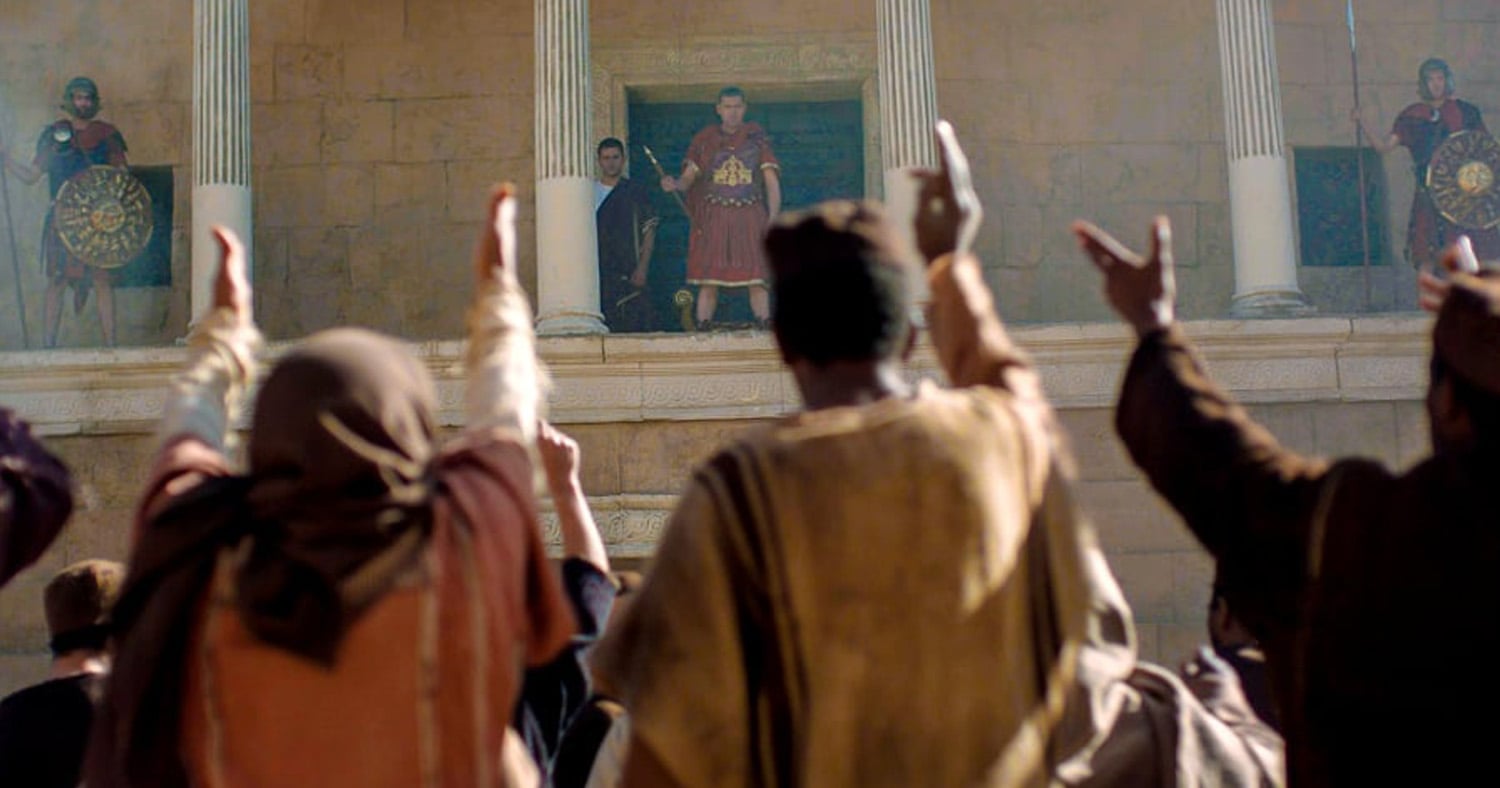
When Pilate presented Jesus and Barabbas to the crowd, in Matthew 27, the crowd chose Barabbas. When he asked what should be done with Jesus, this horrendous interaction occurred.
Pilate said to them, “What then shall I do with Jesus who is called Christ?” They all said to him, “Let Him be crucified!” Then the governor said, “Why, what evil has He done?” But they cried out all the more, saying, “Let Him be crucified!” When Pilate saw that he could not prevail at all, but rather that a tumult was rising, he took water and washed his hands before the multitude, saying, “I am innocent of the blood of this just Person. You see to it.” And all the people answered and said, “His blood be on us and on our children.”
The crowd, worked to a frenzy by the Jewish leaders, and at a time of religious passion, called down a curse upon themselves and their future offspring. Matthew does not record a curse of God upon them, or Christ, the disciples, or any other Christians cursing them. They claimed the curse upon themselves.
So, are the Jews cursed today because of this? Does this passage justify historic antisemitism?
The answer is an unequivocal no. Here are a few reasons why.
Jesus asked the Father to forgive them.
According to Luke’s account in Luke 23:34, as Jesus was being taken to the cross, Jesus admonished the crowd not to weep for Him, but for the calamity that would soon come upon Israel.
But Jesus, turning to them, said, “Daughters of Jerusalem, do not weep for Me, but weep for yourselves and for your children. For indeed the days are coming in which they will say, ‘Blessed are the barren, wombs that never bore, and breasts which never nursed!’ Then they will begin ‘to say to the mountains, “Fall on us!” and to the hills, “Cover us!” ’ For if they do these things in the green wood, what will be done in the dry?”
Then, as He was being crucified, Jesus looked at His tormentors and said,
Father, forgive them for they do not know what they do.
Jesus forgave those who participated in the crucifixion and what Christ asks, the Father does. This was not forgiveness of sins in general, as in personal salvation, but forgiveness for the specific act of crucifying their Messiah.
The Jews did reject Jesus, and the nation was destroyed in AD 70. Some would make the case that the AD 70 calamity was the result of this curse. Jesus did prophesy the terrible things that happened and seemed to connect it to their rejection of their Messiah in general (Matthew 23:37-39), but that is no justification for antisemitism or mistreatment of God’s chosen people on the part of Christians. In fact, those that deal unjustly with His people will be cursed for it according to God’s unconditional promise to Abraham (Genesis 12:3).
The Jews were given the gospel first.
It would be logical to think that if a nation was cursed, then the opportunity for forgiveness and the blessings of union with God and Christ would not be presented to them as a favored group of people first. But that is what God did. It was His plan to do so. The Church would begin at Jerusalem and spread throughout the earth (Acts 1:8).
Paul’s missionary strategy was to present the gospel in the synagogues first, before going to the gentile communities. In Romans 1:16, Paul says that power of God unto salvation is presented to the Jew first. A cursed nation is not granted first place in line.
Paul’s makes the theological argument that the Church is grafted into the root of the Jews, and the future blessings of Israel.
In Romans 11 Paul affirms the continuing special relationship of the Jews toward God. Yes, they often rejected God, and God dealt with them in the Old Testament for those things, they are still the root. The New Testament Church is grafted into the root of Old Testament Israel. He affirms that the New Testament professing church could be rejected as some of the branches of Israel were (Romans 11:21). He also affirms a future day when all Israel will be saved (Romans 11:25-27)
The future Kingdom is still promised to Israel.
God has promised a future Kingdom for all those believe on Him, both Jews and Gentiles. In this Kingdom, He will fulfill all the Abrahamic and David promises. God has not abandoned His people. The New Covenant still applies to the nation (Jeremiah 31:31-34) and Ezekiel’s amazing prophecy is yet to be fulfilled (Ezekiel 37).
The application of the blood of Christ is the ultimate blessing, not a curse.
Not with the blood of goats and calves, but with His own blood He entered the Most Holy Place once for all, having obtained eternal redemption. For if the blood of bulls and goats and the ashes of a heifer, sprinkling the unclean, sanctifies for the purifying of the flesh, how much more shall the blood of Christ, who through the eternal Spirit offered Himself without spot to God, cleanse your conscience from dead works to serve the living God? (Hebrews 9:12-14)
There is no doubt that the screamers in the crowd that day that Jesus was crucified were calling down a curse on themselves, although they felt no fear over it because they believed Jesus to be a blasphemer. However, what they said was that His blood be upon them. In any other Christian context, the application of the blood of Christ is the symbol, not of a curse, but of the ultimate blessing. It is by the blood of Christ we receive forgiveness of sins, declared justified, redeemed from the curse, positionally sanctified, declared sons of God and join heirs with Christ, and are assured of an eternity in heaven. We have, through the application of His blood, our greatest gift and our most precious hope.
It is likely that many in that crowd who called for the crucifixion of Jesus, later became blood bought children of God and members of the New Testament Church. Saul of Tarsus may well have been in that crowd as well as the many Pharisees and Priests who later believed.
His blood was upon believers, but in a completely different way than they could have imagined in the moment they called down a curse upon themselves.
My sin put Christ on the cross as surely as the sins of those who cried “crucify him!.” It is hypocrisy for any of us to claim any more worthiness than those in the crowd that day. I have been redeemed by the blood of Christ. In this marvelous way, may His blood be upon my children and grandchildren as well.
As Joseph told his brothers in Egypt (Genesis 50:20), so Jesus tells those who cursed Him, “You meant it for evil, but God meant it for good.”
Audio version of this post here: The Jewish Curse – the Proclaim & Defend Podcast
Image source: Heartlight.org
Discover more from Proclaim & Defend
Subscribe to get the latest posts sent to your email.