A meditation on the forgotten parable of Mark 4
There is a parable tucked into the fourth chapter of Mark’s gospel that almost never gets preached. It appears nowhere else in scripture. Matthew does not record it. Luke does not record it. It belongs to Mark alone, just three verses long, and it is easy to read past without noticing what it is quietly claiming.
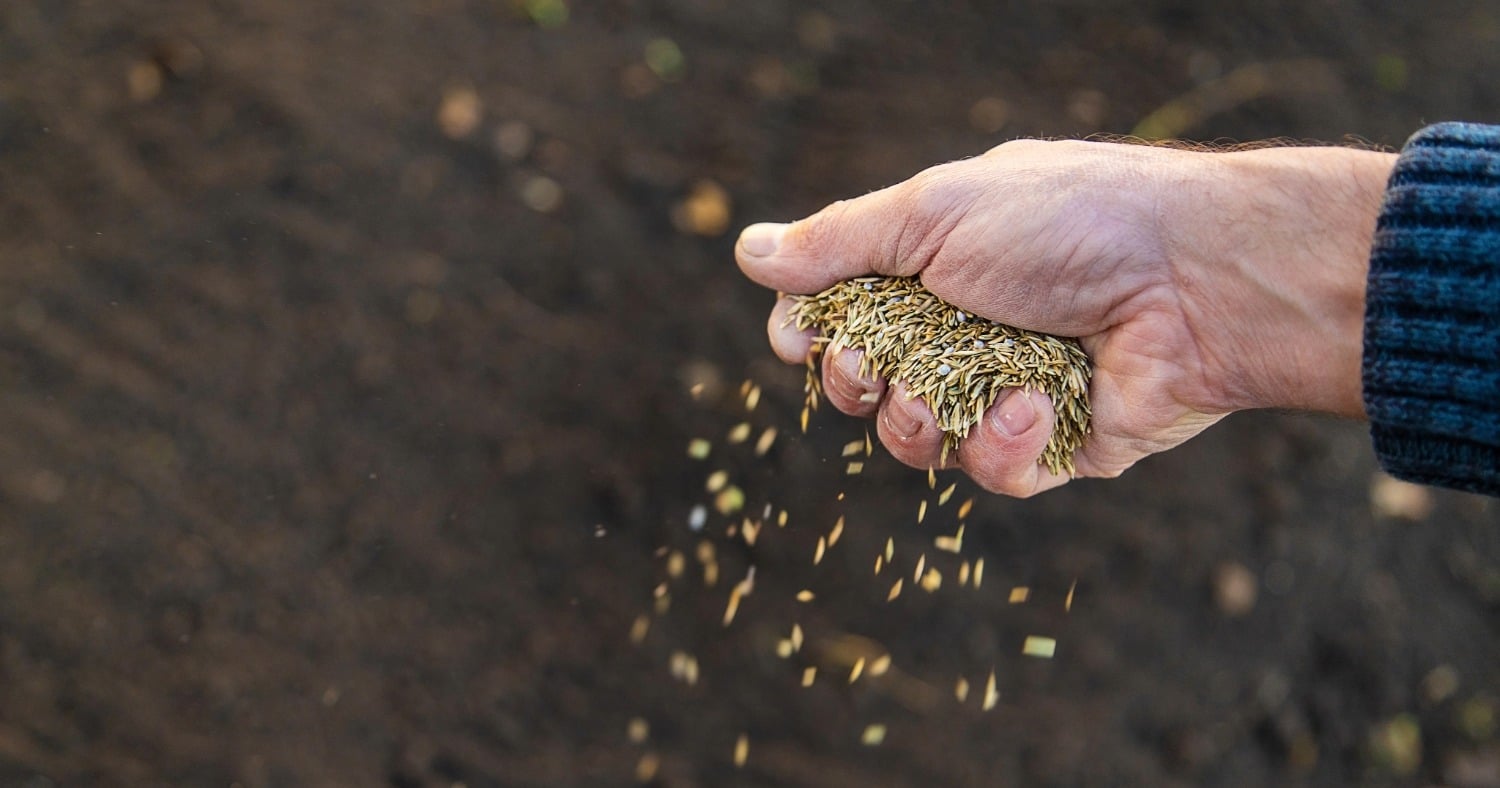
The text says it plainly: the kingdom of God is like a man who casts seed into the ground, then sleeps and rises, day after day, while the seed springs up and grows without his understanding how. The earth produces fruit on its own, first the blade, then the ear, then the full grain in the ear. And when the grain ripens, the man immediately puts in the sickle, because the harvest has come.
It is a small story about a farmer who plants, waits, and reaps. But it is really a story about partnership, about which parts of the work belong to us and which parts belong only to God.
The job that is ours to do
Before we get into the details of this parable, let’s look at a simple truth sitting at its center: somebody must plant the seed. Anyone can do this part. It does not require special gifting or formal training. It only requires that a person be willing to scatter what they have been given.
This was true in the earliest days of the church, when the apostles carried the word from town to town with nothing but conviction and a willingness to speak. It was true of every missionary who has crossed an ocean since. It remains true today, all over the world, in places far humbler than on a mission field. A Bible study scratched together on a lunch break in a printing plant counts. A handwritten sign taped beside a time clock counts. A conversation struck up with a coworker over the hum of a collating machine counts. The seed does not care how modest the soil looks. It only needs someone willing to sow.
There is a kind of sowing that gets done with passion, with real love for the people receiving it, and there is a kind that happens half-heartedly or not at all. Scripture is direct about which produces a harvest. The one who sows in tears reaps in joy. A gospel that is hidden from people is hidden because it has been hidden from them, not because it was incapable of reaching them. The work calls for love, and it calls for urgency. Nobody knows how much time they have. Nobody knows how much time anyone else has. The only sensible response is to do what can be done while it can still be done.
There is an old proverb that warns against the farmer who watches the wind too closely and never sows, who studies the clouds and never reaps. Circumstances will always offer an excuse. Life will always seem too busy, the moment will always seem inconvenient, the right words will always seem just out of reach. But nobody has the perfect words prepared in advance. What every believer does have, regardless of eloquence, is a testimony, an account of what God has done in their own life. That alone is enough to sow with.
It is worth remembering, too, that the sower is never meant to be elevated. In the earliest church, some believers fell into the habit of attaching themselves to one teacher over another, as if the messenger mattered more than the message. The apostle who addressed this took both names off the pedestal and reduced the matter to something almost embarrassingly simple: one person plants, another waters, and it is God who makes it grow. The job of the one sowing the seed is faithfulness, not getting a name for himself.
The part that belongs to God alone
Once the seed is in the ground, the story takes an unexpected turn. The farmer does not stand watch over the soil, willing it to grow. He does not study it or coax it. He goes to sleep.
This detail carries weight. The farmer is not being lazy. He has done what was his to do. What follows is simply outside his control. He cannot make a seed germinate any more than he can make the sun rise. So, he sleeps, and he wakes, and in between, while he is occupied with the ordinary business of living, the seed quietly breaks the surface of the ground.
It grows independently of him. The text is careful to make this point in the way it is constructed: the farmer’s part ends at the planting, and from there the growth proceeds on its own, untouched by his effort.
It also grows inexplicably. The scripture says the man does not know how it happens, and that admission is more interesting than it first appears. Modern science can describe a great deal about germination, the way water swells a seed, awakens dormant enzymes, breaks the seed coat, and sends a root reaching down while a shoot reaches up toward light. Researchers have even begun exploring stranger possibilities still, the idea that a seed might carry some memory of the conditions its parent plant endured, or that it can sense the vibration of falling rain and begin preparing to germinate before a single drop has touched it. Studies earlier this year pointed to exactly that, the sound of rainfall apparently speeding up germination well before moisture arrives. Decades of careful observation, and there is still no full account of the precise switch that tells a dormant seed the moment has come to wake up. The mechanism remains, in the deepest sense, a mystery. If the most advanced scientific instruments cannot fully explain how a seed knows when to grow, it should come as no surprise that no one fully understands how the word of God takes root in a human heart either.
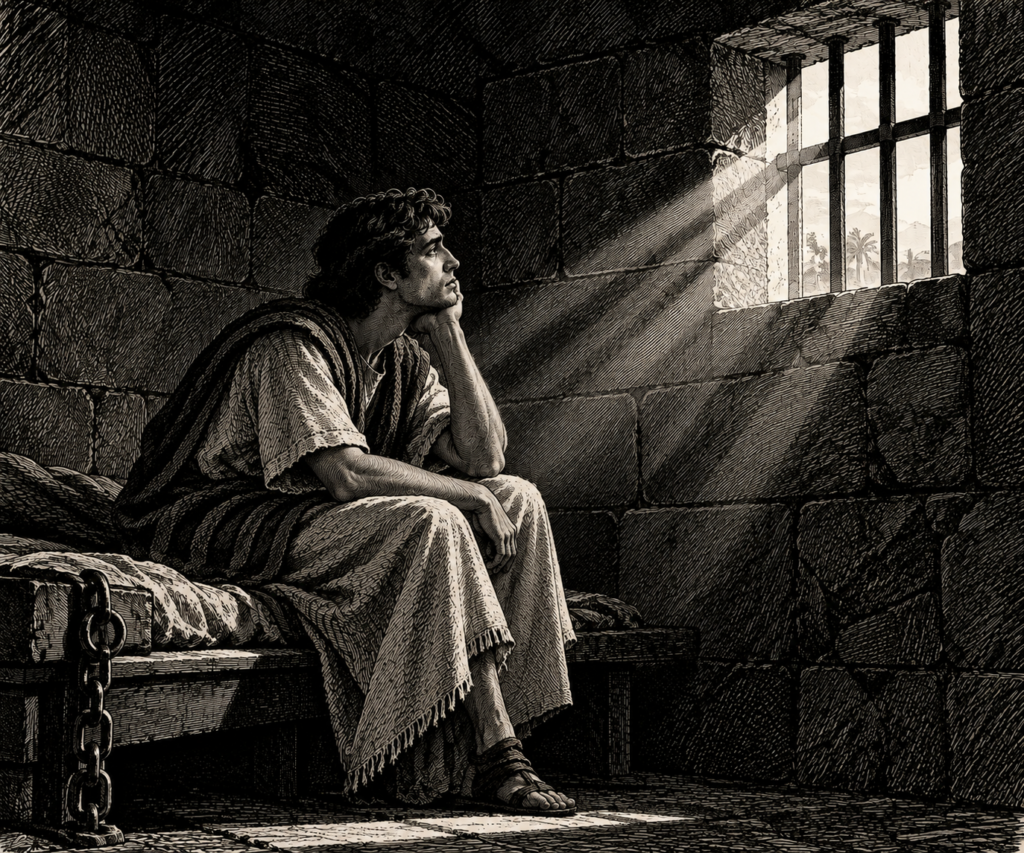
It grows automatically as well, and this is not merely descriptive language. The original text behind this passage uses a word that gives us our own English word for automatic, the same word used elsewhere to describe prison doors swinging open by themselves when an angel arrived to free a captive. Nobody pushed those doors. They simply opened. In the same way, nobody can force fruit to appear where it does not belong. A person could hang apples from a maple tree with string and tape, but no amount of effort would make that tree an apple tree. Growth must come from within what was planted, not be imposed from without.
And finally, it grows in order, in stages that never skip ahead of themselves. First the blade breaks through, the thin green leaf that signals life beneath the soil. Then comes the ear, the structure that will eventually hold the fruit, though the fruit itself is not there yet. Only after that does the full, ripened grain appear. Nothing arrives out of sequence. This is simply how God works, in salvation as much as in agriculture. A person hears the word, then believes it, then is sealed by the Spirit, and only then begins to live in a way that brings glory to God. Each stage depends on the one before it. None of it can be rushed, and none of it happens out of order.
What it means to bring in a harvest together
All of this brings the parable to its final and most encouraging point. When the grain ripens, the same one who planted it is the one who reaps it. The sowing was solitary work, but the harvesting becomes shared work, because God is the one who produced the fruit in the first place. The farmer did not make the grain grow, yet he gets to be the one who gathers it in.
This is not a harvest reserved for the end of the age, when angels will gather the nations for judgment. It is a harvest available now, today, in ordinary places among ordinary people. The same gospel that was demonstrated at a well in Samaria, where a single conversation sent a woman running back to her town and brought an entire city out to listen, is just as available wherever people are willing to speak it. The fields, as that story put it, are already white and ready. Nobody needs to wait for better conditions or a more receptive culture to start gathering. The harvest is described as plentiful right now, not someday.
There will be discouraging days. Seed scattered through tracts handed out on a street corner, conversations struck up with strangers, words spoken at a rescue mission to someone who may walk away unmoved, none of it always produces visible results right away. But the work is never wasted, because the growth was never dependent on the one doing the sowing in the first place. The seed will do what seed does, in its own time, by a power outside human hands.
A familiar promise from Isaiah captures the whole arrangement well. God’s word, going out from him, is compared to rain and snow that water the earth and cause it to sprout, giving seed to the sower and bread to the eater. That word will not return empty. It will accomplish exactly what it was sent to do. And what follows is a description of the result that almost reads like poetry: those who go out with that word go out with joy and are led forth in peace, while creation itself seems to respond, with hills breaking into song and trees clapping their branches like hands. The image is almost playful, but the point underneath it is serious. There is a kind of cosmic celebration built into the act of carrying this word to people who do not yet have it.
The most striking image, though, comes a few lines later, where a thorn bush is transformed into a cypress, the kind of durable, water-resistant wood once used to build ships and palaces. A thorn bush is good for almost nothing except burning. It cuts the hand that touches it and serves no lasting purpose. But that same patch of ground, once it has received the right kind of planting, can produce something strong enough to be built into something permanent and useful. That is the picture of what happens to a life that has received this seed. Someone once useless, even harmful to be around, becomes something sturdy enough to be relied upon, valuable enough to be put to real use.
The seed gets planted by human hands. The growth belongs entirely to God. And when the moment of harvest finally comes, sower and grower stand together in the same field, gathering in the harvest with joy.
This article reproduces a sermon preached on June 14, 2026, which you can listen to here. We used Claude.AI to turn the transcript into the article. Pastor Recker has reviewed and approved the final form of this article.
Image created with Adobe Express.
Discover more from Proclaim & Defend
Subscribe to get the latest posts sent to your email.