
“In the spring, at the time when kings go off to war, David sent Joab out with the king’s men and the whole Israelite army. They destroyed the Ammonites and besieged Rabbah. But David remained in Jerusalem. One evening David got up from his bed and walked around on the roof of the palace. From the roof he saw a woman bathing. The woman was very beautiful” (2 Samuel 11:1–2).
What was David thinking?
David did not wake up that morning thinking to himself, “This is the day that I am going to sin against my God, destroy the life of my faithful servant, defile my neighbor, bring shame upon myself, and wreak wickedness in my family.”
He did not plan to sin.
Destructive, life-changing sin can happen in a moment. One day—one decision—can change the trajectory of your life and your family for generations.
Compare David and Joseph
In similar circumstances, David fell while Joseph escaped. What was the difference? We can learn from both of these men before we make wrecks of our lives.
David Was Arrogant; Joseph Was Humble
It is not hard to understand why. David was a king; Joseph was a slave.
If anyone had a human reason to sin, it would have been Joseph. He could have argued in his own mind that God had forgotten him or that this sin was a necessary step for survival in a place where he had been abandoned by those who should have loved him. But Joseph did not do that. He was humbled by his trial and remained constantly dependent upon God. There is no evidence that he grew angry with God or lost hope, though his situation seemed completely hopeless.
David had endured similar hardship during his years as a refugee in the Negev. Now he had become arrogant, though he probably did not see it in himself. The seeds of this arrogance are in the text. He took many wives (2 Samuel 5:13), which was a display of strength and power forbidden for kings in the Law (Deuteronomy 17:17).
Joseph Was Vigilant; David Was Not
David was at the height of his success and was beginning to enjoy the privileges of monarchy—privileges many around him likely said he deserved. He ascended the throne, conquered Jerusalem, and established it as his capital city. He defeated the Philistines completely. He built a house for himself and began to build a harem. All of this is recorded in 2 Samuel 5.
He had Joab, a cunning and capable military leader whom he trusted completely—so much so that he left military matters in Joab’s hands while he stayed home and rested. He could finally relax and enjoy life. What David failed to realize was that the vigilance required during his decades of uncertainty had made him keenly aware of his dependence upon God for his life and safety at every moment. It seems he did not consider that his greatest enemy might be his own sinful desires.
Joseph, on the other hand, was a slave in Egypt, sold there by his brothers. He was keenly aware of Potiphar’s wife’s intentions and took measures to avoid her.
“And it came to pass after these things that his master’s wife cast longing eyes on Joseph, and she said, ‘Lie with me.’ … So it was, as she spoke to Joseph day by day, that he did not heed her, to lie with her or even to be with her” (Genesis 39:7, 10).
Joseph understood the danger and took deliberate steps to avoid it. David chose to ignore the danger and placed himself in the middle of it.
Joseph Thought Through the Significance; David Did Not
When Joseph was enticed by Potiphar’s wife, he immediately recognized the seriousness of the situation:
“But he refused and said to his master’s wife, ‘Look, my master does not know what is with me in the house, and he has committed all that he has to my hand. There is no one greater in this house than I, nor has he kept back anything from me but you, because you are his wife. How then can I do this great wickedness, and sin against God?’” (Genesis 39:8–9).
Jesus later affirmed this thinking. The two greatest commandments are to love God with all your heart and to love your neighbor as yourself (Matthew 22:36–40). Joseph rightly saw sin with Potiphar’s wife not as a means of survival in a difficult situation, but as a betrayal of the entire ethic of God.
David’s response should have been the same. How could he commit this great sin against the God who had given him so much—and against his faithful servant Uriah? There were even more consequences to consider: How could he sin against Bathsheba in this way, and against the nation for which he was both leader and example?
A Christian worldview requires vigilant thinking. Every day we wake up, we must remember: this might be the day. This might be the day Jesus comes for me. This might be the day my earthly journey ends. And this could be the day—if I am not vigilant—that I turn my back on my Lord and dishonor Him.
May we all come to the end of our earthly journey able to say, as the Apostle Paul did:
“I have finished my course, I have kept the faith.” (2 Timothy 4:7)
Audio version of this post: You Could Ruin Your Life with Sin Today—Are You Being Careful?
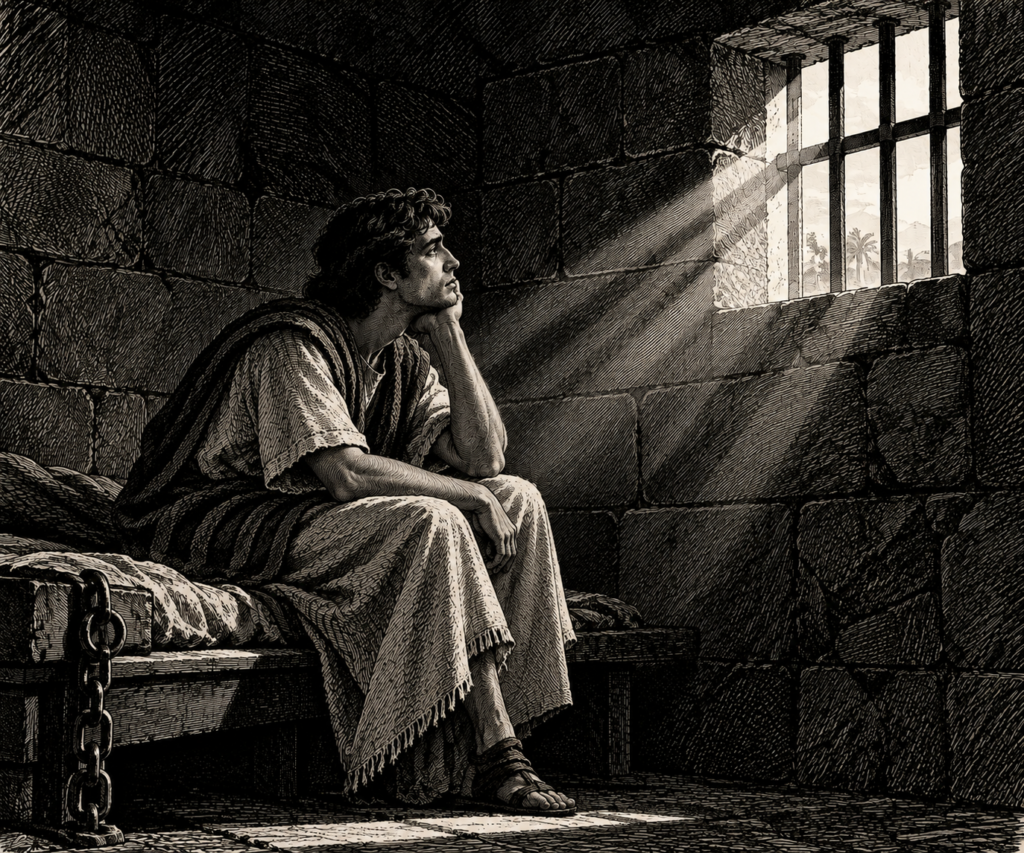
Image generated by Microsoft Co-Pilot
Discover more from Proclaim & Defend
Subscribe to get the latest posts sent to your email.