
Do you have one of those names that give telemarketers pause? You almost feel bad for the guy who has to cold-call a Mr. Anuszkiewicz or a Mrs. Lefebvre to try and persuade them to upgrade their cable, phone, and internet package. By the same token, there are some people out there who always gets your name right (just like some people out there actually do know how to pronounce Anuszkiewicz). It’s the people that know you fairly well who know how to pronounce your name. Even when it comes to those tricky foreign names of far-flung provenance, we can still make do. Just ask my old high school friend Xinzhu who hails from China. He said to pronounce his name “Sing-jew.” Now, I’m reasonably sure that native Chinese speakers would take a much more nuanced approach to the pronunciation, but the way we adopt and adapt foreign names follows an understood convention.
Now, think of how this plays out in our English Bible translations. David and Bathsheba pronounced their son’s name closer to Shelomo than “Solomon.” Pharaoh’s daughter didn’t call her son “Moses,” but something closer to Mosheh. And no one in first-century Palestine ever called our Savior by the name “Jesus.” His name was pronounced something more along the lines to Yeshua. What we’ve done is anglicized Bible because we don’t speak Hebrew and Greek and that’s completely fine. A reasonable effort has been made to import and adapt foreign words to represent their original sounds with acceptable accuracy. You could even say we have a biblical basis for such a practice. Solomon’s name in the Greek of the New Testament became Solomon and Moses was changed to Moyses. Adapting names, to borrow Paul’s wording in Rom. 14:18, is apparently “acceptable to God and approved of men.”
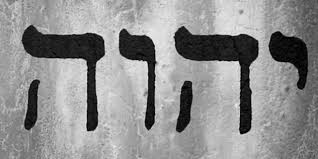
So where do we draw the line with adapting biblical names to English? Is it possible to go too far in tailoring foreign names for English usage that we’ve forsaken reasonable accuracy? God revealed His Hebrew four-letter personal name in the Old Testament as YHWH. Hebrew grammarians tend to believe God’s proper name was pronounced in antiquity as “Yahweh.” (Introducing Biblical Hebrew, 60-61; The Text of the Old Testament, 22). This is the same name we find occasionally rendered in the KJV as “Jehovah” (Exodus 6:3; Psalm 83:18; Isaiah 12:2, 26:4). It also shows up in such well-loved hymns as “Guide Me, O Thou Great Jehovah” and in the chorus from “Like a River Glorious” (“Stayed upon Jehovah hearts are fully blest.”).
So why the divergence in how we pronounce God’s name? Long story short, the Masoretes of the Middle Ages took the third commandment (Exodus 20:7) and ran with it. Whenever they wrote YHWH, they penned in the vowels from the Hebrew word for “Lord” (Adonay) as a reminder for readers to say “Adonay” instead of “Yahweh” out of reverence. Later on, future readers would come along and, misunderstanding this practice, pronounced Yahweh with the vowels from Adonay, thus pronouncing God’s name in a way it was never intended to be read. Implanting the vowels from Adonay between the four Hebrew consonants YHWH, we ended up with the name Jehovah (Lexham Bible Dictionary, “YHWH”). Some medieval scholars then believed this was the proper spelling of God’s name. Tracing the etymology of our English word for God’s name, you can pin it on an erroneous tradition originating in the Middle Ages.
Should it not bother us that we are knowingly calling God by a name that only partially resembles the one He used to reveal Himself? Not necessarily. While Yahweh may be more linguistically accurate, it would be inconsistent to take issue with a word because of its etymological history. (Otherwise, you’re violating 2 John 1:10 if you tell the Mormon or Jehovah’s Witness at your door “goodbye” as the word derives from “God be with you.”) Regardless of how the word entered our lexical stock, it is currently an accepted pronunciation of God’s personal name. It’s not our goal to pronounce biblical names with the accuracy of those who spoke biblical Hebrew or Greek. Remember, Xinzhu didn’t mind being called “Sing-Jew.” God doesn’t mind being called Jehovah. If you want to be a little more accurate, you can refer to Him as Yahweh. This seems to be what motivated some hymnal editors to change the title of “Guide Me, O Thou Great Jehovah” to “Guide Me, O Thou Great Redeemer” (hymnary.org).
Brent Niedergall is youth pastor at Catawba Springs Christian Church in Apex, North Carolina. He holds an MDiv from Shepherds Theological Seminary and is pursuing a DMin from Maranatha Baptist Seminary. Thanks goes to Steve Young, Don Johnson, and Mark Ward for their input.
Sources:
de Jong, Laura. Worship Notes for “Guide Me, O Thou Great Jehovah.” https://hymnary.org/text/guide_me_o_thou_great_jehovah
Ross, Allen P. Introducing Biblical Hebrew. Grand Rapids: Baker Academic, 2001.
Shields, Martin A., and Ralph K. Hawkins. “YHWH.” Edited by John D. Barry, David Bomar, Derek R. Brown, Rachel Klippenstein, Douglas Mangum, Carrie Sinclair Wolcott, Lazarus Wentz, Elliot Ritzema, and Wendy Widder. The Lexham Bible Dictionary. Bellingham: Lexham Press, 2016.
Würthwein, Ernst. The Text of the Old Testament: An Introduction to the Biblia Hebraica. 3rd ed. Translated by Erroll F. Rhodes. Grand Rapids: William B. Eerdmans Publishing, 2014.
Discover more from Proclaim & Defend
Subscribe to get the latest posts sent to your email.