
The Joy of a “Normal” Sunday (a prelude)
This Sunday was different.
No special emphasis. No added elements. Just a regular Lord’s Day.
And yet, that is exactly why it is worth talking about.
The past several weeks have been full in the best way. Between Easter and special services like last week’s Teen Service, our church has enjoyed a season marked by unique moments and heightened anticipation. Those gatherings carry a certain energy. They are memorable, and rightly so.
It is easy to associate excitement in ministry with the exceptional. Full calendars, special speakers, and large events can give the impression that those are the moments when God is most at work. But the steady pattern of weekly worship tells a better and more enduring story.
A normal Sunday is where the church lives.
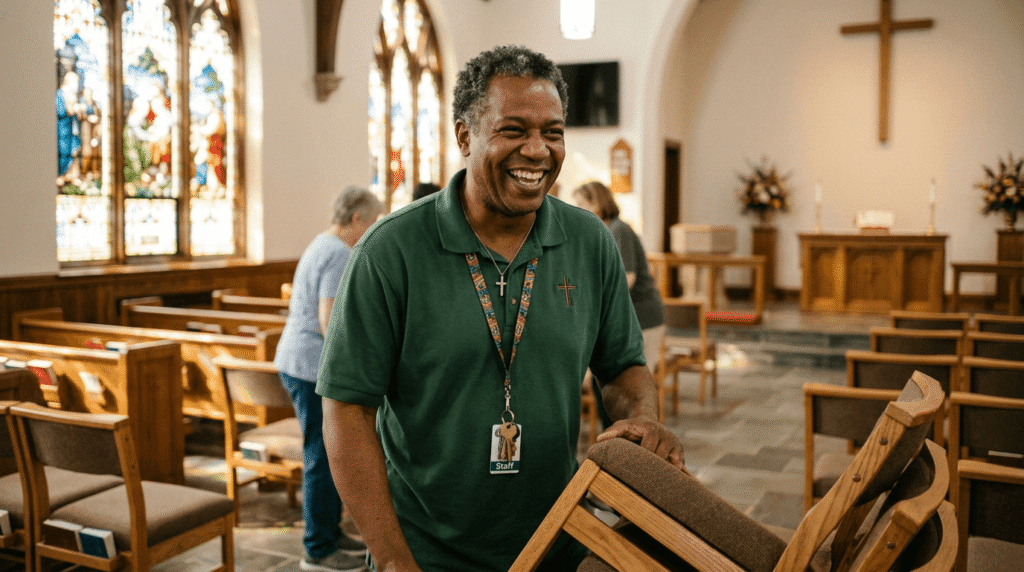
It is where believers gather not because something unusual is happening, but because this is what God has called His people to do. We sing together, not as a performance but as a shared expression of truth. We open the Scriptures, not for novelty but for nourishment. We pray, not out of routine alone, but out of dependence.
These weeks may not stand out on a calendar, but they shape who we are.
Over time, it is the regular preaching of the Word, the repeated rhythms of worship, and the consistent fellowship of God’s people that form spiritual maturity. Growth rarely happens all at once. More often, it takes place quietly, almost imperceptibly, through ordinary faithfulness.
There is also something encouraging about looking around on a normal Sunday and seeing a church that simply shows up. People who come ready to listen, to sing, to serve, and to encourage one another. That kind of consistency is not accidental. It is the fruit of a congregation that understands the value of gathering.
Special services are a gift. They give us opportunities to celebrate, to invite others, and to highlight specific aspects of ministry. But they are not the foundation. The foundation is built week by week, through what might seem routine but is actually essential.
So, this week, there is plenty to rejoice in.
Not because it was extraordinary by outward measures, but because it was faithful. And in the life of a church, that is where true strength is found.
What Does it Mean to be Committed to Church? (the main course)
We often mistake what it means to be committed to the church. We live in a time when it is easy to assume we understand what commitment to the church looks like, but in practice we often redefine it without realizing it.
Commitment can quietly shift into something measured by attendance patterns, levels of involvement, friendships formed, or the number of ministries someone supports. All of those can be good and even healthy indicators of engagement, but none of them are strong enough to serve as the foundation of what it means to be committed to the church.
In fact, it is very common for people to create their own internal “lists” of what matters most in a church. Those lists often include things that are not inherently bad. Strong music. Friendly people. Opportunities for service. Engaging programs for children or students. Clear communication. Again, none of these are wrong in themselves. But the danger is that we begin to treat our personal list as the standard for what a healthy church is supposed to be.
And any list that is not God’s list, formed from God’s Word, is not a safe list to build a church life upon.
That distinction matters more than we often realize. Because when the foundation is unclear, everything built on top of it eventually starts to tilt.
As we have been walking through our inductive study in the book of Jude, that theme has become increasingly clear. Jude is not writing to a church that has stopped gathering. He is writing to a church that is in danger of drifting. His concern is not apathy toward activity, but erosion of truth. He urges believers to contend for the faith that was once for all delivered to the saints. In other words, the issue is not whether the church is active, but whether the church is anchored.
That forces us to ask a deeper question. What actually holds the church together?
At its core, we gather because we are committed to being a Word-based ministry. That is not a slogan or a preference. It is the foundation. The church is not sustained by personality, programming, or even community, though all of those may be present in healthy ways. The church is sustained by the Word of God rightly preached, rightly received, and rightly obeyed.
This means that commitment to church is not first about what we do for the church, but about what we submit ourselves to when the church gathers.
Charles Spurgeon captured this reality with characteristic clarity:
“The Word of God is the anvil upon which the opinions of men are smashed.”
(Charles H. Spurgeon, Metropolitan Tabernacle Pulpit)
Spurgeon’s point is not simply rhetorical. It is foundational. The church is not a place where human ideas are affirmed, but where human thinking is reshaped. Commitment to the church, then, is commitment to sit under the authority of Scripture even when it challenges us, corrects us, or reorients us.
This is why the regular gathering of the church is so vital.
- We gather to hear the Word preached.
- We gather to have our thinking corrected and strengthened.
- We gather to be reminded of what is true in a world that constantly shifts.
And over time, that kind of commitment produces something deeper than activity. It produces stability. It produces discernment. It produces a people who are not easily pulled away by error or distracted by what is secondary.
When the Word is central, everything else finds its proper place. Fellowship becomes more meaningful because it is grounded in truth. Service becomes more purposeful because it flows from conviction. Even routine Sundays become spiritually significant because they are anchored in something unchanging.
So, when we talk about commitment to church, we are not talking about a calendar or a level of involvement.
We are talking about something far more basic and far more important.
Are we committed to the Word that defines the church?
Discover more from Proclaim & Defend
Subscribe to get the latest posts sent to your email.