When Jesus gave the disciples the Great Commission in Matthew 28:19-20, He instituted something radically new—Christian Baptism. Jesus baptized no one, and neither did His disciples to that point. But the ritual of baptism itself is not what was new.
Immersion as a religious ritual was an ancient practice.
The Essenes, a strict religious sect dwelling in communities near the Dead Sea, practiced baptism at the time Jesus began his ministry. There is credible evidence that John the Baptist was part of this community for some of his adult life. The baptism they practiced was a baptism of repentance.
Immersion was a ritual the Jews used as an initiation rite for proselytes entering Judaism. The Jews practiced an immersion rite using Mikvehs (cleansing pools) before entering the Temple Mount. Even the Babylonians and Egyptians used immersion as a symbolic cleansing rite.
Baptism was a contract ritual.
In our culture, we sign documents to publicly verify a contract or agreement. In the ancient world it was common to use rituals to publicly verify contracts. The purpose of the ritual was to create a memorable event in which the terms of an agreement would be remembered by the agreeing parties and any witnesses present. We have examples of these in scripture. In Genesis 15, God uses an ancient suzerainty covenant ritual to seal God’s Covenant with Abraham regarding his offspring and the land his offspring would inherit forever. The covenant included cutting animals in half and walking between the pieces. In this case God Himself walked between the pieces.
In Ruth 4:7, the closest Kinsman Redeemer to Ruth removed his sandal and gave it to Boaz as a public statement that he was giving up his responsibility of Kinsman Redeemer to Boaz.
In the Ancient world, baptism was a public symbolic ritual. While it often had the practical impact of true physical cleansing (as the case with the Mikveh’s and entering the Temple), its greatest value was in making a public statement accompanied by a ritual. Most often, the statement was that a person was unclean morally or spiritually and needed ritual cleansing to worship. With the Essenes, the baptism of repentance was a public confession of sin against God and a commitment to live differently in the future.
Baptism had key elements.
It was inconvenient and unusual. The point of such a ritual was that it was uncommon behavior. Cutting perfectly good animals in half was not convenient. Taking off your sandal and handing to another person was not something a person would casually do. Going to a body of water and being immersed completely clothed before an audience was also inconvenient. That is the point. A common, convenient action would not be memorable.
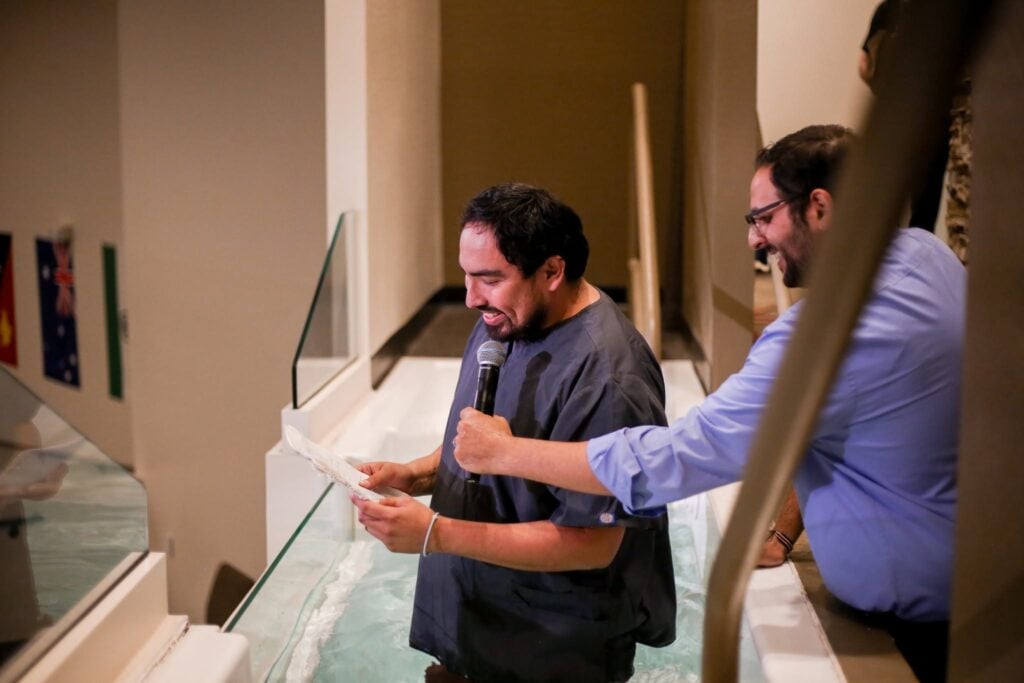
It was public. The purpose of was its public nature. Baptism was not considered a magical or mystical rite but rather a public statement. Baptism was a declaration to the community of an agreement—usually a very important decision in life. Doing a baptism in private would rob the ritual of its purpose.
Is Christian baptism just a copycat practice?
Absolutely not! It was a common practice that had widely recognized significance. Jesus used this practice that everyone in His day would recognize, but He infused it with specifically Christian meaning. The ritual of baptism itself was not nearly as significant as WHY a person was getting baptized. What was declared when a person was baptized was the most significant part of the ceremony.
While other baptismal practices symbolized cleansing or repentance, Jesus declared Christian baptism to symbolize far more.
Christians baptize in the name of the Father, Son, and Holy Spirit.
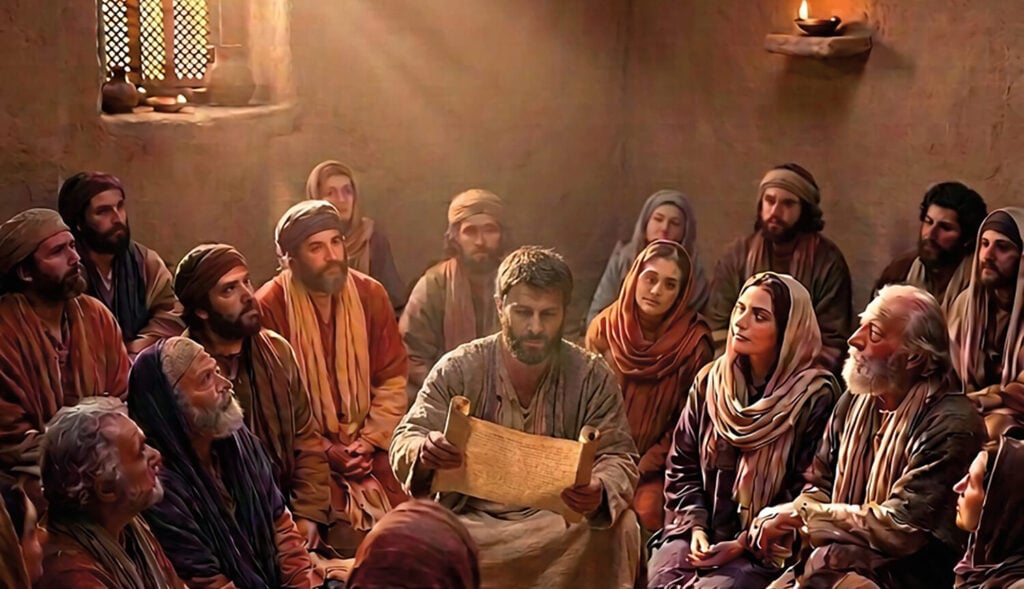
Until the Great Commission, Jesus and His disciples did not baptize. When Jesus told the disciples that this would be part of their Commission for the Age, it must have surprising to them.
The formula declares the deity of Jesus Christ. Christian baptism follows a Trinitarian formula (Matthew 28:19-20).
Baptizing them in the name of the Father, and of the Son, and of the Holy Spirit.
Jesus is equated with the Father—a key Old Testament characterization of God—and with the Spirit—another key Old Testament deity reference first mentioned in Genesis 1 and continuing throughout the Old Testament scriptures. Any baptismal practice that does not have at its heart a declaration of Jesus as deity is not Christian baptism as Jesus instituted it.
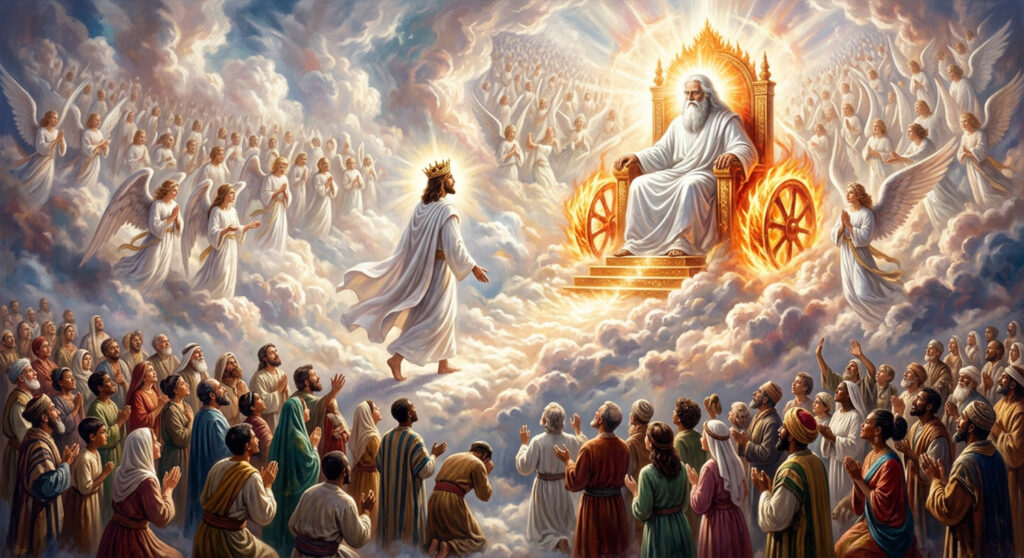
The personal baptism of Jesus is most significant in its revelation of Jesus as divine Son. This event is recorded in all four gospels (Matthew 3:13-17, Mark 1:9-11, Luke 3:21-22, John 1:29-34). When Jesus was baptized by John, the Father spoke from heaven saying,
“This is my beloved Son, in whom I am well pleased”
and a manifestation of the Holy Spirit descended from heaven and landed on Him. This trinitarian revelation became the prototypical model for Christian baptism. It was a declaration of the deity of Christ.
Christian baptism publicly identifies a person as a follower of Jesus Christ. The New Testament condemns “secret Christianity” as a false form (Matthew 10:33-35). Baptism publicly burned the bridge back to idolatry or traditional Judaism. There are some today who put off baptism because they are afraid that getting “rebaptized” might offend their families. That is part of what baptism is intended to do—not offend necessarily but publicly declare a new identity with Christ through saving faith.
Christian baptism symbolizes the spiritual death and resurrection of the believer. Paul declares this in Romans 6. Christian baptism goes beyond a declaration of repentance and cleansing. It symbolizes dying–just as Jesus died. It also symbolizes not just repentance and reformation, but being resurrected into a new life. These were the concepts that Jesus used in describing salvation.
We must avoid theological error in baptism.
I see three key errors.
Baptism is not a supernatural or magical ritual. There is nothing supernatural that happens in Christian baptism. The New Testament does not teach that. The supernatural event happens at the New Birth. Baptism is a public event intended to communicate specific truth to the world about this new believer in Christ.
The teaching picture is the point—it must be honored. The truth being communicated is much more than cleansing and therefore the adoption of the Old Testament rite of sprinkling as a substitute is not acceptable. Baptism identifies with Christ, so a believer should be baptized in the same way Christ was—going down into the water and coming up out of the water. It also symbolizes death, burial, and resurrection. Using pouring or sprinkling as a substitute mars the teaching picture and therefore is not New Testament baptism.
Baptism is not optional. Modern Christians often treat baptism as an optional step for people who are more committed Christians. While it is true that baptism does not save, refusing baptism is disobedience. True believers should want to be identified with Christ. If a new husband took off his wedding ring every time he went out in public, he would have a hard time convincing his bride that he wants to be known as a married man. In fact, she would probably question the sincerity of his love and maybe even the sincerity of his vows—especially the vow of fidelity.
Your baptism did not save you. But if you are not baptized, you must get baptized. It is a matter of obedience to Jesus Christ.
________________________________________________________________________
[i] Jesus did talk about baptizing with the Spirit, but that is not the same thing. And Jesus did talk about the fact that a person needed to be born of water and of the Spirit in John 3, but I believe He was speaking of natural birth and the new birth in that context.
Discover more from Proclaim & Defend
Subscribe to get the latest posts sent to your email.