This seems to be a hot topic these days. After all, it is easy to read someone else’s message on Sunday morning. And AI can write sermons. Also, AI tools now can examine every word every preacher speaks for unattributed quotes or content. It’s daunting to think that members of congregation can be using tools on their phones to evaluate the words of the preacher as he speaks. This can lead to unrealistic expectations and a misunderstanding of the nature of preaching verses the published word or academic paper. So, a few words are in order now, and a fuller development of the subject should follow later. Please read or listen to the end before you criticize.
Originality in preaching should not be an expectation.
The word of God has been exegeted by hundreds of thousands, perhaps millions of preachers over the 2000 years of church history. Libraries are filled with books that explain passages both directly and indirectly. The Word we are commanded to preach is finite in content—bound within the 66 books of the Bible. We are commanded to preach the word of God—not our own creative thoughts or ideas. What should alarm a congregation on Sunday is not when their preacher says things that others have also said, it is when he says things that no other has ever said (someone else said this before me, but I don’t know who).
Giving every known attribution would make for intolerable listening.
When I explain a Greek or Hebrew word, make a comment about cultural practices, or even give a theological definition in a message, you can be sure I did not come up with that on my own. However, if I were to credit every commentary, theology, or Greek grammar used in sermon prep as I preach a message, my preaching would nearly be intolerable to follow.
Last Sunday, I made the case for the date of the writing of Revelation being the mid-90’s AD based upon the writings of Irenaeus, Clement of Alexandria, and Eusebius. However, I did not give John Walvoord (page 13 of his commentary on Revelation) credit for that information because it would have interfered with the flow of the message. This was not plagiarism. Spoken presentations do not regularly cite all sources within the presentation. Any reasonable listener would understand that I am not a first-person source for such information, and I would be glad to reveal my source should I be asked.
Preachers study for their messages. They study a lot. The sermon prep desk is piled with books, and there are lots of open windows on the computer screen containing information from the best Bible study apps available.
To my congregation:
While I never preach the messages of others, in full, or in part, everything I say on Sunday morning—or other times—likely came from someone else in some way. If you want to know where it came from, feel free to ask me and I will do my best to give you the source.
Some material is impossible to source.
To this day, I find myself in preaching quoting Bible passages that I memorized as a child and did not “re-memorize” later in life. It is just there, deep in the recesses of my brain and seems to come out when appropriate.
I am in my 40th year of pastoral ministry. I grew up in church. I have listened to tens of thousands of sermons. I have spent thousands of hours reading theological books and commentaries, as well as books on all kinds of Christian related topics. I have an undergrad degree in Bible, and two graduate degrees and a dissertation. Besides that, I have researched and written constantly over the years.
Sometimes, in my study, I will purchase a new book and read a passage that says something very similar to what I have said from the pulpit—sometimes almost word for word. So, what happened? Did he quote me? I doubt it. Did I quote him? No, I never read the book before. Are we both quoting someone else? Maybe, but if so, he doesn’t give a source and I don’t remember one. Did we, independently, come up with the same wording? That is also entirely possible, especially for one or two sentence statements.
My mind is filled with all kinds of information from lots of various sources, and it is impossible to really know where it came from–whether it is from me, or if it is from someone else. The more a preacher studies and prepares over the years, the more this is the case.
Similar texts should produce similar sermonic structures.
As we exegete the word and put that message into a sermonic form that reflects the text, it only makes sense that there will be similar sermon structures among thousands of messages preached on those texts over the years. It would be an undue burden on the preacher not only to produce a sermonic outline but then search all possible sources to make sure he is not, in full or in part, duplicating someone else’s sermon. I don’t think God intended truth to be copyrighted.
Preaching is not about grades, academic content, or originality. It is about the clear declaration of the message of the word of God.
A Sunday morning sermon is not a seminary paper. Many seminary grads have destroyed their congregations by treating the Sunday morning message like it is. In the academic setting, a student needs to show his work. The purpose of the academic class is not to just teach a student to produce quality work, but to teach him the process.
When multiple preachers approach a passage with a similar hermeneutic, and a similar theological understanding of the word, it only makes sense that the resulting message will have similarities.
Preaching is not about the preacher.
As listeners, never walk away from a message thinking how wonderful a preacher your pastor is. The man of God does not want the focus on himself. Walk away having been touched by your wonderful Lord through His wonderful word. As preachers, He must increase, and we must decrease (I read that somewhere before).
Plagiarism in preaching does exist, and it is wrong for more reasons than in seminary.
Manuscript preaching has become more popular in recent years. The danger in this type of preaching is that it becomes easy to preach someone else’s manuscript—not just a quote—all, or large parts of another person’s sermon. This is not just plagiarism, it is laziness and it is a great danger. If you are copying and pasting content, it needs to be cited in some way. The practice of asking AI to write a sermon is similar—even if the preacher checks the message for doctrinal error.
Both practices are deceptive and unethical, and both are dangerous short cuts. Wrestling with the text as the preacher prepares a message is a very important part of his own spiritual life and development. It is in the wrangling of the study that God applies the word to the heart of the preacher first. Every message I preach should transform my soul before I serve it to someone else. Every chef should eat his own cooking (not sure where that one came from).
A sermon is a message that is delivered to people; it is not just a message. I must remember the people to whom I am preaching when I prepare a message. Consider every message in scripture–whether the Sermon on the Mount, Peter at Pentecost, or Paul on his journeys. Every message was the word of God crafted and delivered with specific content for a particular group of people. The same can be said for the prophetic messages of the Old Testament. Another man’s manuscript was prepared for another man’s congregation. And who knows who the AI is thinking about when it throws its creations together.
We have more work to do.
New technology produces new temptations for preachers and new expectations from those who listen.
Audio version of this article: Plagiarism and the Preacher – the Proclaim & Defend Podcast
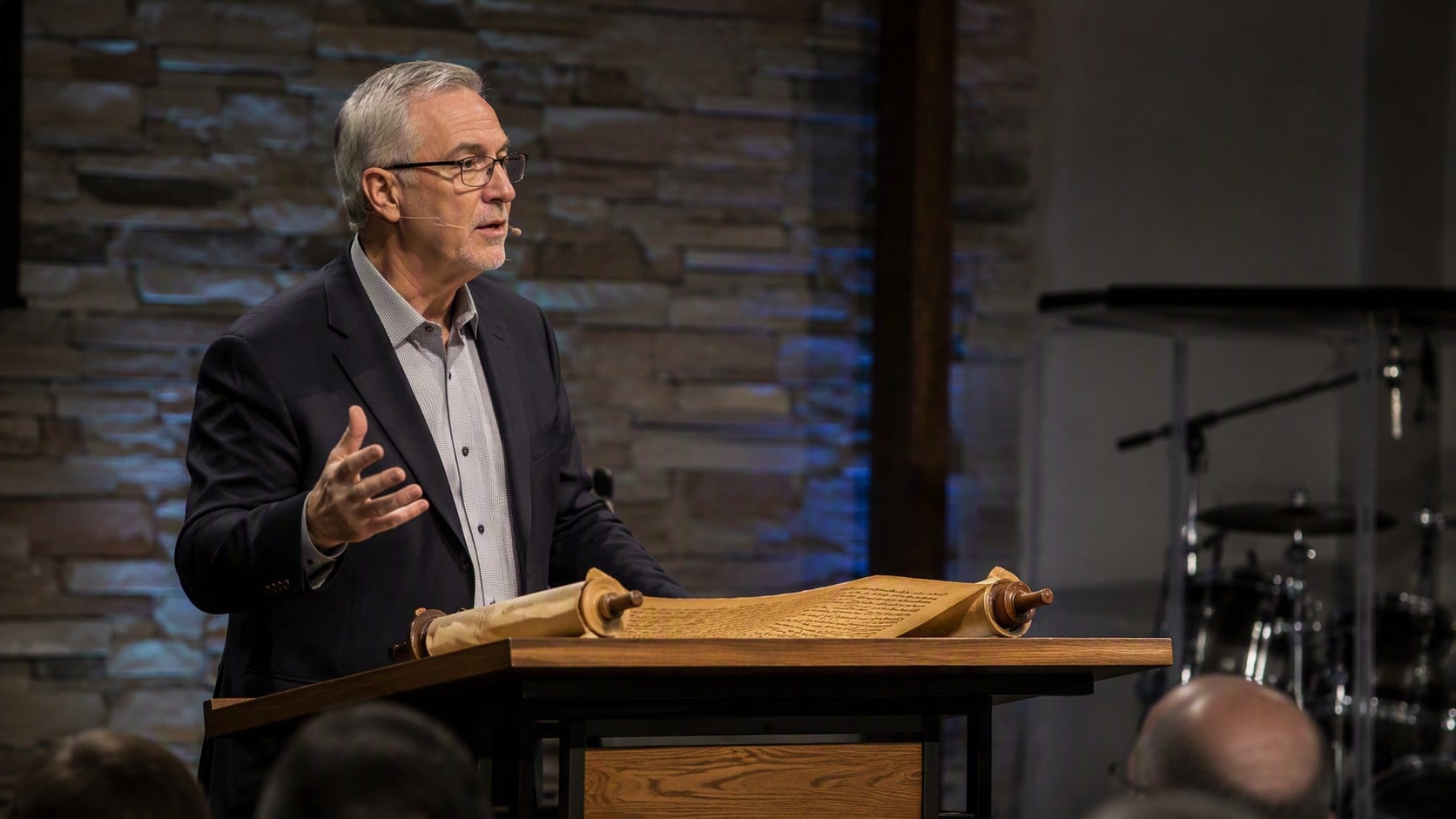
Image generated by Microsoft CoPilot (look closely, you can tell)
Discover more from Proclaim & Defend
Subscribe to get the latest posts sent to your email.