
If you are a pastor, please read all of this. If you are not, please forward it to your pastor. He needs to hear it. And of course, read it yourself.
Discouraging times need an encouraging message.
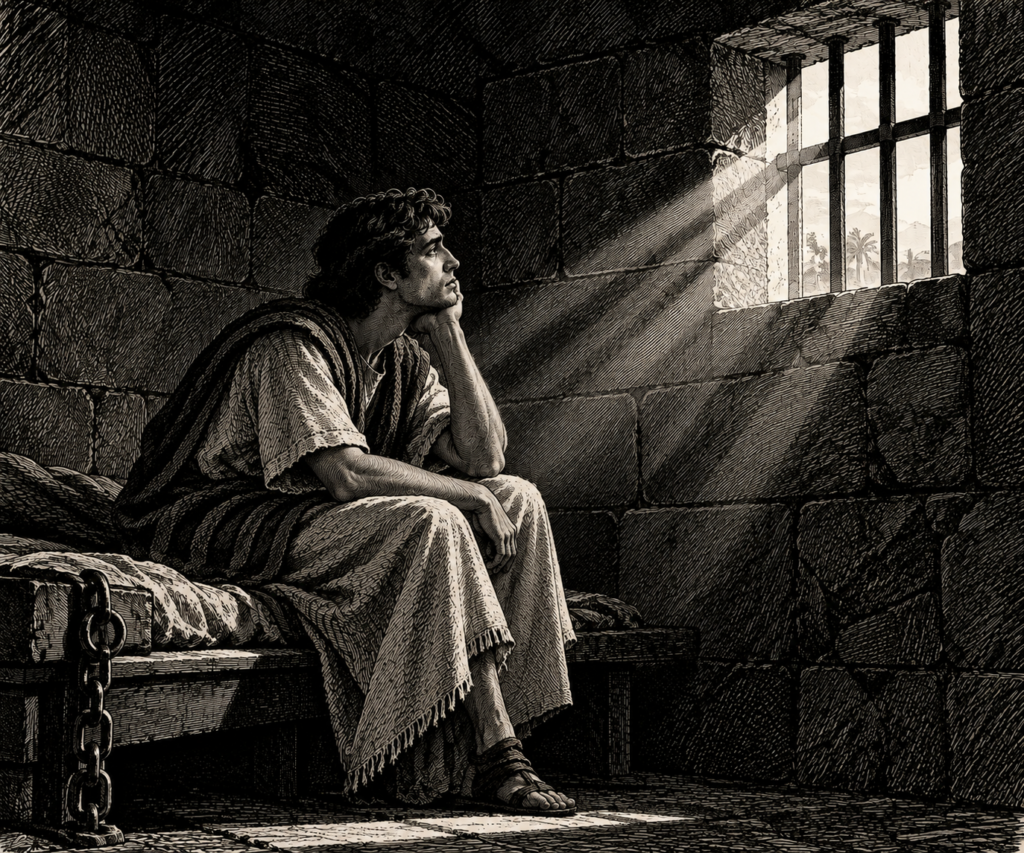
The end of the first century was coming to a close. John, the last remaining Apostle was in exile on Patmos, and Jesus had not yet returned. With the passing of each year and the martyrdom of the Apostles, the hope of the 1st Century church wavered. At first, they expected Him to come at any time. Then, as time passed, they surely expected the time to be closer. But now John is coming to the end of his earthly sojourn and Christ will not return in His glory before the Apostolic age ends.
Not only that, but the church had also endured several seasons of persecution—first under the Jews, then Nero, and now under Domitian.
In this setting Jesus speaks these words of encouragement and challenge to His people. This message is intended for the churches of John’s day, but also for all the churches of the age between the close of the canon and the ultimate return of Christ.
It is for us.
The Jesus who was, who is, and who is to come.
The self-descriptions of Jesus in Revelation 1 are profound. He is the timeless one. He is the Alpha and Omega. He is the beginning and the end. He is the first and the last. He is the one who was, who is, and who is to come. He is the one who lives, was dead, and now lives forevermore.
The Revelation is not of “St. John the Divine” but of Jesus Christ. John faithfully presented the “Jesus who was” in his extensive gospel. The “Jesus who is to come” is described in being and in activity from Revelation chapters 4-20. However, we often miss the importance of the “Jesus who is.” He is also described in Revelation 1-3. This is the Jesus of the present. This is what He is right now.
He is the Jesus Who is among us.
Then I turned to see the voice that spoke with me. And having turned I saw seven golden lampstands, and in the midst of the seven lampstands One like the Son of Man, clothed with a garment down to the feet and girded about the chest with a golden band. (Revelation 1:12-13)
The phrase “Like the Son of Man” is a curious expression in this passage. Our English understanding sometimes misconstrues the idea. This is not the word for “similar to” but rather “the likeness of”. It IS the Son of Man. It IS Jesus Christ and He is standing in the middle of the lampstands, which are identified as the churches in Revelation 1:20.
Jesus wanted the churches to know that while they were waiting for His return in glory, He is also already here among them. Not visibly, but in His full glory, nonetheless. We can reasonably assume that the presence of Christ among the churches is not limited to the seven of chapters 2 and 3 but also applies to all true New Testament Churches. Jesus is among us, now, even as we wait for Him. He is here and that presence is no less real than it will be when He returns to earth bodily to reign.
We get this in theory, but I do not think we get it truly mentally or spiritually. Our worship on Sunday would look much different if we did.
He is the Jesus of glory.
The Jesus who is here is different from the Jesus of the gospels. In the gospels, His glory was veiled by His pre-glorified flesh. It seems to even be different than the post-resurrection manifestations of Jesus before He ascended to heaven in Acts 1.
The Jesus of the present is the High Priest Jesus. John describes Him as wearing the long garment of the High Priest down to His feet and with the golden sash. He is the timeless Jesus, with the white hair, like and Ancient of Days in Daniel. He is as John described Him in John 1 as the eternal Word, creator, and Ancient One. He is the all-seeing Jesus, whose eyes are like a flame of fire. Not only does He see, but the fiery eyes of Jesus intimate response, judgment, passion, and activity. He is the judging Jesus whose feet are like brass refined in a furnace and out of whose mouth the word of judgment proceeds (see Revelation 19). The sound of His words is like many waters, like all the voices of the universe speaking as one—powerful, full, unmistakable.
This is the Jesus that walks among us.
He is the Jesus who holds the messengers in His hand.
The “angels” or “messengers” to the seven churches are the pastors of these churches. Certainly, churches could have angelic beings assigned to them, but it seems more likely that he is speaking of the pastors.
This idea takes my breath away as a forty-year veteran of pastoral ministry. He holds me in His hand. The senior pastor role of a church can be a very pressure-filled and lonely role. Any pastoral ministry can be.
We once hire a pastor who had been in the business world and had risen to vice-president of a major international company. After several months in pastoral ministry, I asked him how he was doing and he said,
“This is the hardest thing I have ever done! Everything I do matters so much more than before, and I am ALWAYS on duty!”
All I knew was pastoral ministry, so I didn’t know how to compare it to secular employment. This put it in perspective for me. True pastors. Truly dedicated servants of God who are conscientious stewards of the calling are under a great burden.
That is why it is so overwhelming to know that He holds me, in this role, in His hand. Burdened and sometimes discouraged pastoral servants, He holds you in His hand. I am not sure all that means, but I am certain we should take comfort in the idea.
He is the Jesus who sees us.
It is likely that the first century Christians would feel abandoned. The Apostles soon would all be gone, and Jesus had not returned. But Jesus assures the church, not only that He is present, but that also He sees them.
To every one of the seven churches He says, “I know what you are doing” (Revelation 2:2, 2:9, 2:13, 2:19, 3:1, 3:8, 3:15). Not only does He see us, but He is also speaking to us through the Spirit and the word. He repeated says, “He who has an ear, let Him hear what the Spirit is speaking to the churches (Revelation 2:7, 2:11, 2:17, 2:29, 3:6, 3:13, 3:22). Through these seven churches, He is speaking to us as well.
The messages to the seven churches are important, but the fact that Christ is with us now, walking among us, seeing us, evaluating us, holding us, and speaking to us, should also be a challenge and encouragement to us.
Jesus is near. Jesus is here.
Audio version of this post: What Is Jesus Like, Right Now?
Discover more from Proclaim & Defend
Subscribe to get the latest posts sent to your email.