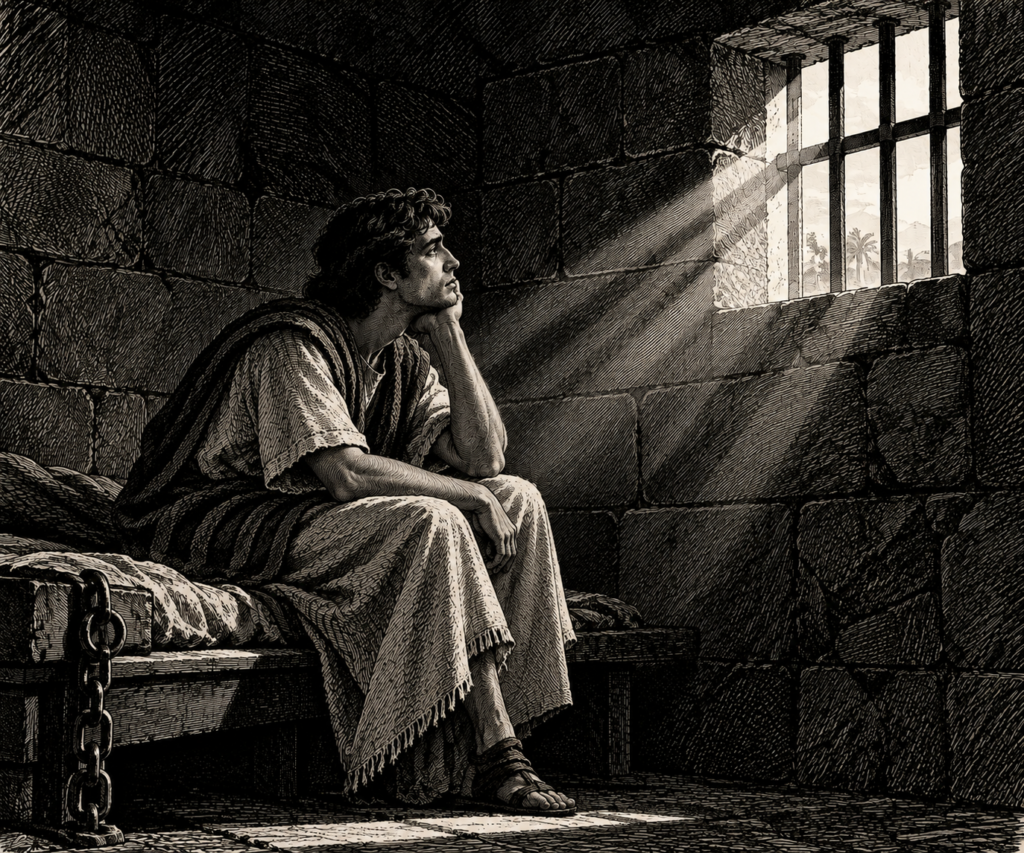

The book of Esther is a story of reversals. It is also a story of the providence of God, though God is not mentioned in the book. The following rehearses the book of Esther and ends with lessons for us to learn from Esther today.
The Story of Esther
The story begins with a powerful king. Ahasuerus reigned from India to Ethiopia over 127 provinces. His influence was great. When he gave a feast at his palace in Susa, the army of Persia and Media, along with the nobles and governors of the provinces were before him. For 180 days he showed off “the riches of his royal glory and the splendor and pomp of his greatness” (Esther 1:4).
On the other side of the palace gates in Susa there was a man named Mordecai the Jew. His family had been taken captive over a hundred years earlier by Nebuchadnezzar during the short reign of Jeconiah (also called Jehoiachin; cf 1 Chronicles 3:16; 2 Kings 24:8-17). Mordecai was raising his orphan cousin Hadassah, also called Esther.
When the powerful and (likely) drunk King Ahasuerus became angry with his Queen Vashti for refusing to come to his party, he dethroned her. The king’s advisors encouraged him to send an edict throughout his vast kingdom to gather all the beautiful young virgins to his harem. Esther, a beautiful young Jewish woman, was taken into the harem. Mordecai commanded that she not reveal her Jewish heritage, and Esther obeyed.
Throughout the story, we are told repeatedly that Esther won the favor of her foreign conquerors. Much like Joseph in Egypt (cf. Genesis 39:4, 21) and Daniel in Babylon (cf. Daniel 1:9), “Esther was winning favor in the eyes of all who saw her” (Esther 1:15).
Mordecai would sit at the gate with all the king’s servants (Esther 2:21; 3:2-4). He was loyal to the king, making known a plot against the king’s life (Esther 2:21-23), yet he would not bow down to Haman, another player in the story.
Haman had been advanced by the king above all other officials. He had commanded that people bow down and pay him homage (Esther 3:1-2). When Mordecai refused to do so because he was a Jew, Haman became furious. Haman’s fury extended to the entire Jewish nation “throughout the whole kingdom of Ahasuerus” (Esther 3:7).
By this time, Esther had won the favor of the king and been queen for about 5 years. Ahasuerus still did not know that she was a Jew, nor that Haman was thus setting himself up as the queen’s enemy. Haman paid the king, and the king gave his authority for Haman in all the king’s provinces “to destroy, to kill, and to annihilate all Jews, young and old, women and children” on the 13th day of the 12th month, a date chosen by lot, literally “Pur” (Esther 3:13).
Like the edict regarding Vashti’s deposition and the gathering of beautiful women, an edict was sent to all the provinces to inform them of the upcoming slaughter. While the city of Susa was thrown into confusion, the king and Haman sat down to drink (Esther 3:15). While the Jews’ enemy celebrated, Mordecai and all the Jews throughout the king’s provinces mourned and wept (Esther 4:1-3).
When Esther heard of Mordecai’s mourning, she sent her servant to enquire. Mordecai explained all and commanded his cousin to go to the king and beg him to save her people. Esther returned the message that she could not go unbidden to the king and had not been called to him for 30 days. If she went unbidden, she could risk her life. Mordecai bluntly informed her that if she kept silent, deliverance for the Jews would come elsewhere, but she and her household would perish. He suggested that perhaps she had been placed as queen for exactly this reason (Esther 4:4-14).
Mordecai’s words emboldened his cousin. She ordered Mordecai to tell the Jews to fast for three days, along with her and her women. She would go to the king, even if it meant that she perished (Esther 4:15-16).
On the third day, Esther dressed herself in her royal robes and bravely went unbidden to the king. Whereas Vashti refused to come to the king when bidden and lost her crown, Esther went unbidden to the king and was offered half of his kingdom. Instead, she simply asked that he and Haman come to a feast she’d prepared that day. He was quick to agree and brought Haman to the feast, where once again the king offered half his kingdom to Esther. Again she asked that he and Haman come to her feast the following day (Esther 5:1-8).
While Esther was carefully laying down her plans to destroy Haman, Haman, his wife, and his friends plotted how to destroy Mordecai. Though elated from his feast with the king and queen, Haman’s anger over Mordecai’s refusal to respect him overshadowed his joy. All of his riches, honor, and glory meant nothing to him as long as Mordecai the Jew sat at the gate. Haman’s wife and friends encouraged him to have a huge gallows built, tell the king in the morning to have Mordecai hanged on it, and then he could joyfully go to the feast without Mordecai to think about (Esther 5:9-14).
That joy in the morning never came for Haman. Instead, during the night, the king could not sleep and had his chronicles read to him. He heard of a man named Mordecai who had informed the palace about a plot against the king’s life. When Ahasuerus asked what honor had been done for Mordecai, he was told that nothing had been done. The king asked who was in the court and was informed that Haman had just walked in (perhaps to request that Mordecai be hanged?!). The king asked what Haman would do for the one the king wanted to honor. Haman, assuming the king wanted to honor him, gave him a grand list. Ahasuerus told Haman to do all that he had said and to honor “Mordecai the Jew, who sits at the king’s gate” (Esther 6:10).
Afterwards, Mordecai returned to the king’s gate, but Haman returned home mourning. At this point, Haman’s wife and friends knew that their plan was hopeless, telling him that instead of overcoming Mordecai, Haman would fall before him (Esther 6:12-13).
Even while they were talking, the king’s eunuchs arrived to hurry Haman to Esther’s feast. Instead of going with the joy he had expected, he went in defeat and then was fully defeated. After being offered half the kingdom once more, Esther finally asked for her life and the life of her people who had been sold for the purpose of annihilation. The king asked who would do such a thing, and Esther accused wicked Haman of being her foe and enemy. Whereas Haman had just boasted the day before of being the only one invited along with the king to the queen’s feast, Haman now was terrified of them both (Esther 7:1-6).
Haman, after futilely pleading with Esther, was condemned by the king to be hanged on the gallows Haman had prepared for Mordecai, whose word saved the king. The same day, Queen Esther the Jew was given the house of Haman, the enemy of the Jews (Esther 8:1). The signet ring which the king had given Haman (Esther 3:10), was taken back and given to Mordecai, whom Esther set over the house of Haman (Esther 8:2).
Whereas once Haman asked for the annihilation of the Jews—if it pleased the king—and was given the authority to send a decree that it be done (Esther 3:9-13), now Esther pleaded—based on her pleasing the king—to let Haman’s edict to destroy the Jews be revoked (Esther 8:3-6). Ahasuerus gave Esther and Mordecai clearance to write an edict in his name however they pleased regarding the Jews. And an edict was written and spread throughout all the king’s provinces, mirroring the edict Haman had sent (Esther 3:13). Whereas the Jews were to be annihilated—including women and children—as well as plundered, now the Jews were allowed to gather, defend themselves, and kill anyone—including women and children— that attacked them and plunder them as well on the same day (Esther 8:9-14).
At the news of the previous edict, Mordecai had sat in sackcloth and ashes and the people mourned (Esther 4:1-3). With this new edict, Mordecai now left the king robed in royal garments and a crown, and the people rejoiced (Esther 8:15-17).
The text itself explicitly points out the biggest reversal of events in the preservation of the Jews in exile:
Now in the twelfth month, which is the month of Adar, on the thirteenth day of the same, when the king’s command and edict were about to be carried out, on the very day when the enemies of the Jews hoped to gain the mastery over them, the reverse occurred: the Jews gained mastery over those who hated them (Esther 9:1, emphasis added).
In fact, even the Feast of Purim, by its very name emphasized the reversal of events:
For Haman the Agagite, the son of Hammedatha, the enemy of all the Jews, had plotted against the Jews to destroy them, and had cast Pur (that is, cast lots), to crush and to destroy them. But when it came before the king, he gave orders in writing that his evil plan that he had devised against the Jews should return on his own head, and that he and his sons should be hanged on the gallows. Therefore they called these days Purim, after the term Pur. Therefore, because of all that was written in this letter, and of what they had faced in this matter, and of what had happened to them, the Jews firmly obligated themselves and their offspring and all who joined them, that without fail they would keep these two days according to what was written and at the time appointed every year, that these days should be remembered and kept throughout every generation, in every clan, province, and city, and that these days of Purim should never fall into disuse among the Jews, nor should the commemoration of these days cease among their descendants (Esther 9:24-28, emphasis added).
The book of Esther began with the greatness of Ahasuerus and the rise of Haman to second-in-command. The book ends with the greatness of Mordecai the Jew and of his advancement to second-in-command. The king thought well of him, and his fellow Jews thought well of him for seeking both peace and the welfare of his people (Esther 10:1-3).
Lessons from the Book of Esther
#1 The Hand of God at Work
In all of these reversals, the hand of God was at work. “The providence of God acts through the coincidences and the remarkable reversals that advance the plot.”1 And what did the providence of God accomplish? The preservation of His chosen people. Beyond this, the providence of God shows that He is at work behind the scenes in all of history for his purposes.
#2 Living in the Middle of God’s Providence
But it is easy to look back on Esther and cheer her on for going to the king when she knew she might perish, because we know that she comes out a champion. But in the middle of God’s providence, she did not know the outcome, and that is where we all are in our Christian lives. We all live in the middle of God’s providence. Perhaps we are able to look back on previous experiences and see how God works things out, but almost all difficulties are just plain old hard when we are in the middle of them.
#3 Suffering Before the Reversal
Esther—an imperfect example of a Jewish woman—had to make a bold and brave decision to do what was right even at risk to herself. Joseph was imprisoned for years before being elevated to second-in-command to Pharaoh. Moses was a shepherd for 20 years before taking a complaining group of Israelites through the wilderness for 40 years before reaching (but not entering) the Promised Land. David ran for his life for years from Saul before becoming king, and then he had to run from his son after he became king. Job suffered “merely” to make a point to his heavenly observers (and the future readers of his story); he received double of what he’d lost, but his losses were staggering. Each of these Bible “heroes” suffered much before (and if they even attained) a reversal.
#4 Faithful While Fearful
All the reversals in the book of Esther are an amazing show of God’s providence. The “endgame” is amazing to watch. But I imagine that all the moves, the sacrifices, and the difficulty in persevering were faith-testing and fearful. We can see a little bit into Esther’s fears in her conversation with Mordecai, yet we also see her develop into a strong character by the end.
#5 Praising the Lord for His Providence
We cannot see at the moment the purposes of God’s providences. But we can be encouraged as we see—even unnamed—the providence of God in the book of Esther as he reversed all of the plans that men tried to set in place. We can know that God is in charge, even over the most powerful rulers in this world. And for this, we can praise the Lord for His providence.
Praise the Lord! Praise the name of the Lord, give praise, O servants of the Lord, who stand in the house of the Lord, in the courts of the house of our God! Praise the Lord, for the Lord is good; sing to his name, for it is pleasant! For the Lord has chosen Jacob for himself, Israel as his own possession. For I know that the Lord is great, and that our Lord is above all gods. Whatever the Lord pleases, he does, in heaven and on earth, in the seas and all deeps (Psalm 135:1-6).
—
Holly Huffstutler serves with her husband David, the pastor of the First Baptist Church of Troy in Troy, MI. She has a master’s degree in Biblical Ministries and blogs with him here where this post first appeared. Holly is a homemaker, raising and putting her four children through school.
Image generated by ChatGPT
- Fredric W. Bush, Ruth (Dallas: Word, 1996), 325. [↩]
Discover more from Proclaim & Defend
Subscribe to get the latest posts sent to your email.