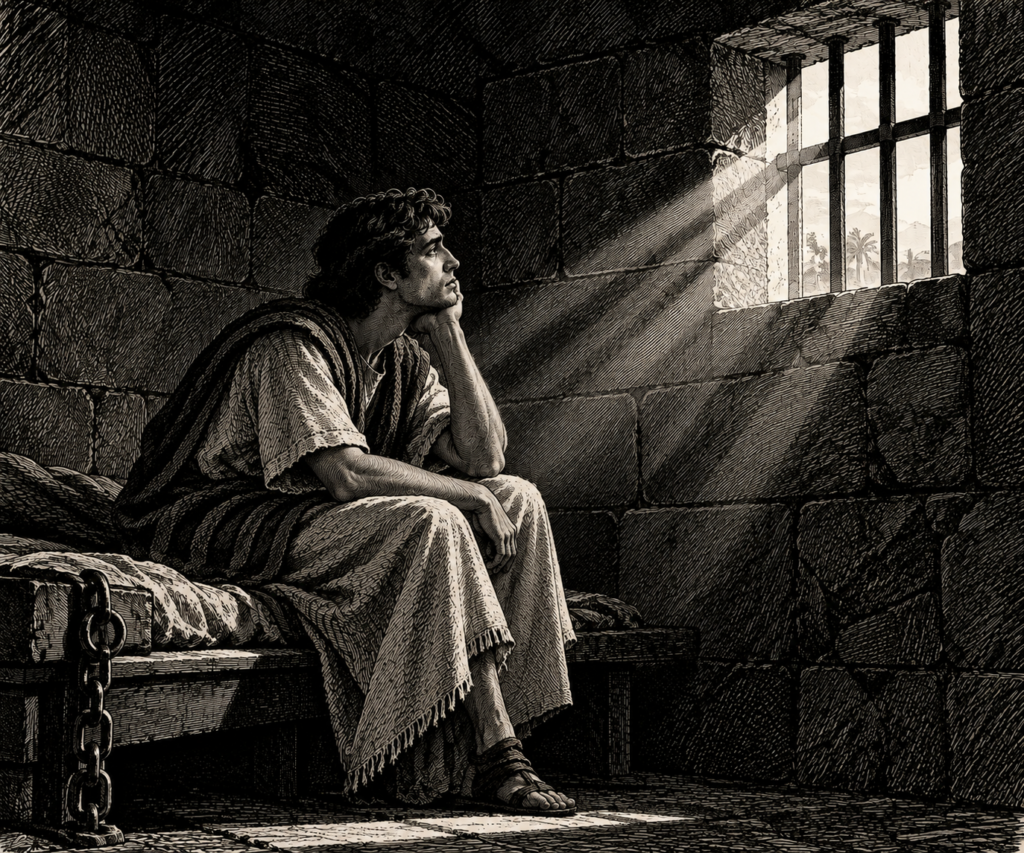

I want to be like Jacob. That might seem like a strange statement if you know the story of Jacob. Jacob’s name means “heel-grabber” or “trickster,” and Jacob lived up to the name. Jacob tricked his own brother and his father before fleeing for his life. In a move of brilliant poetic justice, God brought Jacob to his uncle Laban, who tricked the trickster. Their mutual deception eventually led to a deterioration of the relationship, to the point that Jacob fled in the night from his own uncle and father-in-law.
When Jacob is brought face to face with his estranged brother, we see a glimmer of faith in him. He prays and wrestles with God, doing what God told him to do even though he understandably fears his brother will kill him. Jacob gets to the end of his own devices, and finally grabs a hold of God and won’t let go until he knows he has God’s blessing. Sure enough, God comes through for Jacob in a mighty way. Then Jacob almost immediately lies to his brother and the tricking resumes.
Furthermore, if we look at Jacob’s family, we will find that it was a mess. After being tricked by Laban, Jacob marries two sisters and has children with each of them, as well as with each wife’s handmaid. This chaos led to favoritism, selling Joseph into slavery, and eventually even to a massacre. Once Jacob and the family move down to Egypt, he is given a chance to stand before Pharaoh. This is what he says:
My pilgrimage has lasted 130 years. My years have been few and hard, and they have not reached the years of my ancestors during their pilgrimages (Genesis 47:9).
How inspiring. What a wonderful testimony before one of the most powerful men in the world. And yet… the author of Hebrews doesn’t look at Jacob and see a miserable failure. Rather, he includes him in Hebrews 11, the famous “Hall of Faith.” What was it that so inspired this scriptural author that he wrote down Jacob’s name?
The answer might surprise you—Genesis 48. If you are having a hard time remembering what is going on in this chapter, that’s not surprising. Genesis 48 recounts Jacob’s blessing of Ephraim and Manasseh, the sons of Joseph. While modern readers might brace themselves and speed read these chapters on their way through the Bible, the New Testament looks with admiration at the faith that Jacob is showing.
So why would that be so impressive? It might be helpful to read what Hebrews says in full:
By faith Jacob, when he was dying, blessed each of the sons of Joseph, and he worshiped, leaning on the top of his staff. (Hebrews 11:21)
Several years ago I was preaching through Hebrews 11, and that little phrase tripped me up. As I’ve said before, one important lesson I’ve learned is that if something in Scripture doesn’t seem to make sense, that can be a great place to go digging and find spiritual treasure. Besides, when you announce that you will be preaching through a passage, you find yourself forced to drill down until you figure out what is going on.
As I studied this passage, I was intrigued by the little statement that Hebrews included, “leaning on the top of his staff.” What difference did that make? Why include that detail? Well, the point seems to be that his strength was gone. Jacob made it to the point where he could barely stand, and yet he was still worshipping.
Jacob didn’t live a perfect life, far from it. There were many, many disappointments with his character. But when God commented on Jacob’s life, he didn’t look at him and think to himself, “What a failure.” He saw someone who, though it was pretty uneven, was faithful unto the very end. Even the blessing of Joseph’s sons was an act of faith, because what Jacob was doing wasn’t wishing them well. That’s how we might be tempted to think—that the blessing was Joseph wishing his grandsons a good life. Rather, the blessing was a prophetic utterance of sorts, passing God’s favor down to the next generation. Blessing Joseph’s sons meant that, despite the disappointing turns Jacob’s life had taken, Jacob still believed God would be true to His Word and what God had said would come to pass.
Earlier this year I was privileged to speak at the funeral of a long-time member at our church. This funeral was for a man who was a beloved teacher, a loving father, and a committed deacon. He is someone who had an impact on me, both in his life and in his death. Preaching the gospel at his funeral was a humbling privilege, and thinking about his life challenges me to be faithful to the end. There are many who make a great start in serving the Lord, as did Judas and Demas. But Hebrews 11 and the life of Jacob remind us that true faith is often most clearly seen by an old man, unable to stand on his own, still fiercely clinging to God’s promises.
As I go to funerals now, especially of those who were faithful to the end, I can’t help but think of Jacob, and of the little phrase “he worshiped, leaning on the top of his staff.” So, while it might raise an eyebrow when I say I want to be like Jacob (especially if you know his story), I say that because I want to be remembered as Scripture remembers Jacob. As someone who, while their faith was imperfect, endured to the end. Someone who held on to God’s Word when they couldn’t hold on to anything else. Someone who worshipped leaning on a staff.
Ben Hicks is the Associate Pastor at Colonial Hills Baptist Church in Indianapolis. This article originally appeared on his Substack.
Discover more from Proclaim & Defend
Subscribe to get the latest posts sent to your email.