Growing up in church, I heard this parable preached often. There were good applications made from the text such as the fact that there will be accountability one day for what God has entrusted to us, and that God only expects us to work with what He has given us. All of these are applications made to Church Age Christians about faithful stewardship. But deeper study of the parable makes me wonder if that is the point that Jesus was intended to make when He used this literary device.
How does the context impact the primary application?
Jesus is speaking to the Jews in the story. The intended audience of the Book of Matthew is the Jews. This story is part of a set of three parables—all with similar scenarios. The arrangement and construction of the parables indicate all three parables are intended to be seen together and drive home a main point, or at least closely related points.
If the parable is intended for believers and about stewardship, how are we to interpret the punishment for the unprofitable steward in Matthew 25:29-30?
For to everyone who has, more will be given, and he will have abundance; but from him who does not have, even what he has will be taken away. And cast the unprofitable servant into the outer darkness. There will be weeping and gnashing of teeth.
The consequence described in these verses is eternal punishment of an unbeliever, not an unfaithful believer. Jesus chose these words specifically. He intended to communicate damnation as the punishment for the unprofitable steward. Unless we choose to adopt a salvation by profitability doctrine, which would conflict with a host of other scriptures, there must be more to what Jesus is saying here.
How do we explain the differences between the parable of Matthew 25 and the similar parable recorded in Luke 19:11-27?
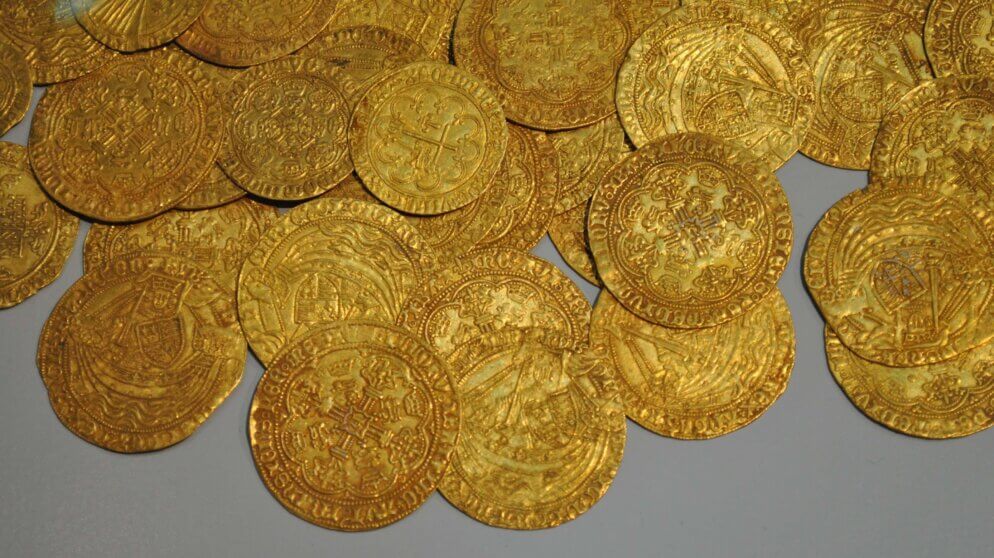
Let’s seek to answer the questions in reverse order. Jesus told variations of this parable on more than one occasion—perhaps many occasions. The parable of the Ten Minas differs from the parable of the Talents in a number of ways. They were spoken at different locations and different times. In Luke, Jesus is in Jericho teaching, just after the conversion of Zaccheus. In Matthew, Jesus is in Jerusalem teaching the crowd during the final week before the crucifixion. In the Luke passage, the servants were given minas. A mina was an amount of money roughly equivalent to about three month’s wages for a field laborer. In Matthew 25, the servants are given talents. The talent was also an amount of money, but worth somewhere around 20 years wages for a field laborer. Jesus changed key elements of the story, maybe because of the difference between the countryside people in His audience in Jericho vs the fabulously wealthy religious and national leaders living in Jerusalem.
The similarities are clear though. There are three servants. All three are given a treasure. The master expects them to do something with that treasure. Those that did well were rewarded and the unprofitable servant who did nothing with the treasure was punished.
The most shocking aspect of the Luke parable is the similar climax to the Matthew 25 parable.
For I say to you, that to everyone who has will be given; and from him who does not have, even what he has will be taken away from him. But bring here those enemies of mine, who did not want me to reign over them, and slay them before me.’ ” (Luke 19:26-27)
In both passages, the line of preaching concerns the rejection of the Messiah, and the consequence of being unprofitable with the treasure is death, even eternal death.
Let’s consider the context of the Matthew 25 parable.
Jesus has been excoriating the religious leadership of Jerusalem for their hypocrisy and their rejection of the Messiah (Matthew 23). He then talks about the judgment that will come upon Jerusalem, and the future judgment that will be associated with the events surrounding His eventual Second Coming. Now in Matthew 24:45-25:30, He tells three parables intended to drive home application regarding the Jews and the rejection of the Messiah.
All three stories have common elements. There are servants who have specific responsibilities. The ruling servant is supposed to take care of the Master’s household, the Bridesmaids (Virgins) must be ready to attend to the bride with oil in their lamps, the stewards are supposed to manage the treasure given to their charge.
All three stories include servants who were faithful and ready and servants who were unfaithful and unprepared for the Master (or the Bridegroom’s) return.
All three stories include the imminent and sudden return of the key figure—either the Master or the Bridegroom.
All three stories include stark rewards and punishments. Those who are faithful receive more rewards and more blessed responsibilities.
The unfaithful are rejected and punished completely.
For the household ruler who beat the servants of the household and partied rather than caring for the household, Matthew 24:50 says —the master of that servant will come on a day when he is not looking for him and at an hour that he is not aware of, and will cut him in two and appoint him his portion with the hypocrites. There shall be weeping and gnashing of teeth.
For the bridesmaids that were not ready, Matthew 25:11-12 says–Afterward the other virgins came also, saying, ‘Lord, Lord, open to us!’ But he answered and said, ‘Assuredly, I say to you, I do not know you.’
And for the unprofitable servant in Matthew 25:29-30–And cast the unprofitable servant into the outer darkness. There will be weeping and gnashing of teeth.’
Jesus does name their specific sins.
Many people miss this, but Jesus does name the specific sins in each parable. The household ruler is guilty of hypocrisy (Matthew 25:51). The Bridesmaids are guilty of foolishness (Matthew 25:8), and the unprofitable steward is guilty of laziness (Matthew 25:26).
So, let’s put it all together.
Jesus is telling the Jews why many of the Jews rejected the Messiah. One reason is hypocrisy. The intended audience here is easy. All of Matthew 23 rebukes the Pharisees of hypocrisy and abuse of the people. Everyone listening would have known this parable was about them. They were so concerned about their own well-being and abusing others that they rejected the Messiah.
Another reason some reject Messiah is foolishness. The bridesmaids were asleep. They were not looking for Him. So, they missed Him when He came. They wanted to be part, but put off being ready until later. They were not opposed to Him, but they did not accept Him either. They should have been ready and looking for Him.
The unprofitable servant missed the Messiah because of laziness. At first, it seems like this application is a stretch, but it’s not. It fits the context and it is exactly how Jesus applied the similar Luke 19 parable.
And he said to those who stood by, ‘Take the mina from him, and give it to him who has ten minas.’ (But they said to him, ‘Master, he has ten minas.’) ‘For I say to you, that to everyone who has will be given; and from him who does not have, even what he has will be taken away from him. But bring here those enemies of mine, who did not want me to reign over them, and slay them before me.’ ” (Luke 19:24-27)
The Jews had a treasure, given to them by God, over which they should have been stewards so that they would have readily received the Messiah when He came. Instead, they ignored the treasure and were held accountable for it.
So, what is the treasure that the Jews had and should have stewarded faithfully?
The text does not say, so anything from here forward would be speculation. Paul may give us a hint in Romans 3:1-2.
What advantage then has the Jew, or what is the profit of circumcision? Much in every way! Chiefly because to them were committed the oracles of God.
And maybe Psalm 19:7-11.
The law of the Lord is perfect, converting the soul;
The testimony of the Lord is sure, making wise the simple;
The statutes of the Lord are right, rejoicing the heart;
The commandment of the Lord is pure, enlightening the eyes;
The fear of the Lord is clean, enduring forever;
The judgments of the Lord are true and righteous altogether.
More to be desired are they than gold,
Yea, than much fine gold;
Sweeter also than honey and the honeycomb.
Psalm 119:72
The law of Your mouth is better to me
Than thousands of coins of gold and silver.
Psalm 119:162.
I rejoice at Your word
As one who finds great treasure.
And Jesus Himself in his teachings might lead us to think this way. His parable of the soils would then be a parallel.
For me, once I see this here, I cannot unsee it. Every 1st Century Jew would have sung these songs about the treasure of the word of God.
I am not saying that these parables, and the parable of the talents in particular are only about the initial offer of the Kingdom to the Jews. Jesus is now talking to the Jews individually about why they personally reject or accept the Messiah. And the references to the return of the Master seem to clearly point to the Second Coming of Christ, which is also clearly in the context. People miss the Messiah for similar reasons in all ages.
There is parallel application for the Church Age, even if it is not the primary application to the initial audience. People miss finding Jesus as Savior for the same reasons. They turn religion into a hypocritical practice that takes real relationship with Christ out of the picture. Others fritter away their lives on foolishness, not considering the fact that the their lives could be over (or Jesus could return) in an instant. People have the word of God all around them. It’s on their shelf at home, in the nightstand at nearly every hotel, on their phones, in the library, handed to them outside of schools and yet they throw it away without even considering its message.
Every one of these responses will send a person into eternity without Christ–into everlasting punishment as described by Jesus here.
Audio version of this post here: Problems with the Parable of the Talents in Matthew 24:14-29
Discover more from Proclaim & Defend
Subscribe to get the latest posts sent to your email.