
As a young pastor, I watched my mother walk a path that many dread but most will eventually face — the journey of caring for aging parents. First, it was my grandfather, whose health declined rapidly and who passed away in my parents’ home — in the very room that had once been mine. A few years later, my grandmother battled bone cancer. The pain and complexity of her condition was beyond my mother’s ability to manage alone. She agonized over the decision to place her in hospice care, ultimately spending hours with her every day during those final months.
Now, my mother is facing her own end-of-life journey, and I find myself retracing the steps I once helped her take. After nearly four decades of ministry, I’ve counseled many people in this same situation. What I’ve seen time and again is that even the most loving, conscientious children are often riddled with guilt — especially when decisions feel impossibly hard. But Scripture offers clarity, comfort, and guidance for those walking this sacred path.
The Bible speaks directly to our role in caring for aging parents. In 1 Timothy 5:8, Paul writes that anyone who does not provide for their relatives is “worse than an unbeliever.” This passage isn’t about caring for children — it’s about widows and aging parents. The responsibility falls on family first, not the church or society.
At the same time, Matthew 19:5 reminds us to put God first, even above family. This isn’t a contradiction — it’s a call to prioritize obedience to God. And one way we obey Him is by caring for those He’s entrusted to us. Sometimes this means making hard choices, like stepping away from ministry temporarily or coordinating care with siblings. These are not easy decisions, but they are guided by biblical principles.
The Danger of Bitterness
Some children struggle with bitterness due to past wounds inflicted by their parents. Perhaps your parents treated your grandparents poorly, or maybe they treated you or your siblings unfairly. In the early 1970s, folk rock artist Harry Chapin released a haunting ballad that became a cultural touchstone. It tells the story of a father who never had time for his son. The son, echoing the refrain, says, “I’m gonna be just like him, yeah. You know I’m gonna be just like him.” Eventually, the son grows up to neglect his father in old age — just as he had been neglected.
This scenario, while emotionally resonant, is not acceptable for a believer. We are called to break the family sin cycle.
Scripture calls us to respond with kindness, respect, and righteousness — regardless of our parents’ flaws. The command to honor our father and mother in Exodus 20 comes without exceptions. Romans 12:19 tells us that vengeance belongs to God. We must trust Him to deal with the sins of others. That doesn’t mean we ignore justice or expose loved ones to harm. Wisdom must guide our actions. We do not cover up sin, nor do we expose our children or spouses to abuse from our parents.
The Danger of Doing it Yourself
Paul’s instruction in 1 Timothy 5:8 goes beyond physical presence — it’s about overall care. No parent should be abandoned. They should be surrounded by love, provided with daily necessities, healthcare, and emotional support. Sometimes the most loving choice is professional help. Seeking out quality care is not a failure — it’s wisdom. And even when aging parents are difficult, we are called to respond with grace.
The Danger of False Guilt
Caring for aging parents is emotionally complex. False guilt is one of the most damaging pitfalls. Scripture does not command us to do everything ourselves. Most family members are not equipped to provide skilled nursing or medical care. Trying to do so may actually harm the parent and serve only to ease our own guilt. Instead, finding the best possible help and being present through the process is a faithful fulfillment of biblical care. Trying to provide care you’re not equipped to give may feel noble, but it can be harmful. It’s not loving to sacrifice your parent’s well-being to soothe your own conscience.
The Danger of Misplaced Priorities
We may prioritize safety over happiness, or money over comfort. For example, your 88-year-old mother may prefer the comfort of her own home, even if it’s riskier. The trauma of a forced move may not be the most loving choice. After all, happiness and peace is more important than eliminating all safety risks at 88 years old. Let them enjoy their final years — even if that means eating donuts instead of bran flakes.
The Danger Recency Bias
One of the most subtle dangers is recency bias. The person we see in their final days, affected by dementia or Alzheimer’s, is not the full picture of who they are. It’s easy to let these moments define our memory of them, but we must deliberately meditate on their best days. We are often remembered for our worst moments, but love calls us to remember the good.
As you face these difficult decisions, seek wise counsel and plan ahead. Crisis moments are rarely ideal for clear thinking. Don’t let others’ choices guilt you into decisions that aren’t right for your situation. Every family is different. Make the wisest, most loving decision you can — for your parent’s sake and for God’s glory.
The audio version of this post is here: A Biblical Message for Children of Aging Parents
Dr. Kevin Schaal serves as the pastor of Northwest Valley Baptist Church in Glendale, Arizona and as the President of the FBFI.
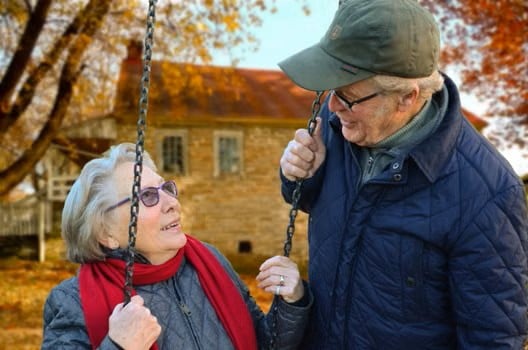
Photo by Jordy Muñoz on Unsplash
Discover more from Proclaim & Defend
Subscribe to get the latest posts sent to your email.