Do you ever read a passage of Scripture and think to yourself, “What in the world was that?” Ever finish a passage and wonder why in the world God included that story, account, or passage in His holy Word? Do you ever struggle to know what exactly is the point of a seemingly odd and confusing passage?
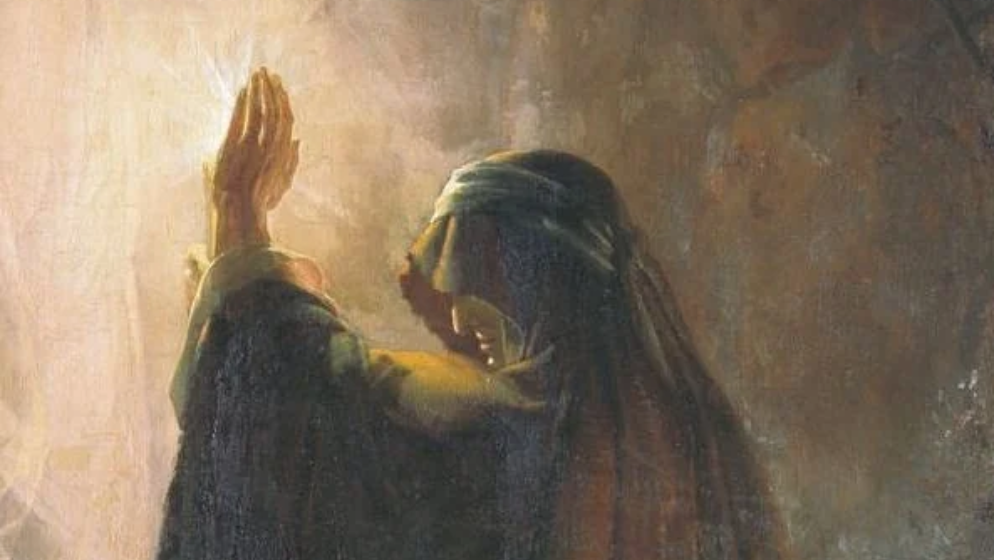
If you’ve ever read 1 Samuel 28, then you’ve probably had that reaction. For an entire chapter, we read about Saul, the king of Israel, who goes to a witch or a medium. He hasn’t heard from God, and he’s desperate, so he needs someone who can talk to the dead. After finding this medium, Saul asks her to conjure up the ghost of Samuel, and she seemingly does. Samuel then tells Saul that he is going to die with his sons on the following day in battle. Saul is understandably traumatized, and the story goes on from there.
The tricky thing about this passage is that there is not just one question that needs to be answered, but a whole host of questions. Many of them are related and overlap, so teasing them out isn’t easy. In this post we will do the best we can to unpack this tricky passage by answering these questions one at a time.
Did Saul Actually Talk to Samuel?
Some have tried to argue that this wasn’t Samuel, that instead it was just some sort of elaborate trick. The problem is that the text doesn’t say this. The exact wording in the biblical record says “And Saul perceived that it was Samuel” (28:14) and then that “Samuel said to Saul” (28:15) and “Then said Samuel” (28:16). In case we missed it, the story ends with Saul being afraid “because of the words of Samuel” (28:20). Not only that, but what Samuel predicts to Saul is exactly what happens, once again confirming that it was a true prophetic message.
It’s important to realize that God didn’t forbid necromancy (speaking to the dead) or other occultic practices for Israel because such practices never worked. He forbade them because they could work. There really is a spiritual realm, and to borrow an analogy I’ve heard elsewhere, if you make a call to the spirit realm someone might pick up. The problem was not that supernatural forces didn’t exist or communicate with people; the problem was that God wanted His people to listen to Him and His Word. Those who did make contact with the spiritual realm any other way were going to be coming into contact with evil forces who are in rebellion against God.
Now, some have speculated that this woman was basically a fraud, and that her surprised reaction was a result of actually seeing someone coming. There may be something to this, as there seemed to be an unusual amount of shock and somehow she learned that this was Saul. In any case, in this instance it would appear that God genuinely allowed Saul to hear from Samuel one last time, even though Saul went about it the wrong way.
Who or What Are the “Gods” in Verse 13?
One particularly odd phrase worth discussing is the mention of “gods.” 1 Samuel 28:13 in the KJV reads “And the king said unto her, Be not afraid: for what sawest thou? And the woman said unto Saul, I saw gods ascending out of the earth.” Now, most modern translations have moved away from such a coarse translation. Some translations have “a god” (ESV, NET), some have “divine being” (NASB, NRSV), some have “spirit” or “spirit form” (NKJV, CSB), the NIV even has ghostly figure. What is this strange and rare Hebrew word that is being used here? Well, it’s elohim, the normal Hebrew word for god in the plural. One point for the KJV.
In fairness to the other translations, elohim seems to be a broader term than what we think of narrowly as a deity. The term seems to mean something like “spirit being” and so it’s possible this woman was just saying that she saw a spirit coming out of the earth. Since Saul immediately switches to the singular (“What is his form?”) it is understandable why translations would want to switch the plural elohim to a singular “spirit being” since that’s what the context seems to demand. Okay, one point for everyone.
In the end, although this phrase strikes us as odd, from a Hebrew standpoint it is simply saying that the woman saw a spirit being/spirit beings coming out of the ground.
So Where Was Samuel?
Why did Samuel come out of the ground, then? Where was Samuel when he died, and why was he asleep? Before Christ died, it would seem that Old Testament saints and those destined for hell were kept “inside the earth” from the perspective of the biblical writers. This is the concept of Sheol, the place where the dead lived/live. The Hebrew word sheol normally means simply “grave,” but it also includes the place where the spirits of the dead go to live. This is why in English we often translate the Hebrew word sheol as either “grave” or, in modern translations, “Sheol.”
Sheol was a place that had two compartments, one for the righteous and one for the wicked. This is what we see from the story of the rich man and Lazarus. The righteous would enjoy God’s favor and the wicked would be tormented for their sins. I would argue that this has changed for believers since Christ’s resurrection, as Paul now says that to be absent from the body is to be present with the Lord (2 Corinthians 5:8). This background explains why Samuel is coming up from the earth.
Why Did God Allow This?
So why wouldn’t God just shut this whole thing down? He could have, after all. Even if this was just a really good necromancer and God didn’t have to intervene in a special way, He could have kept Saul from hearing from Samuel. In this instance, it would seem that part of the reason for God’s permitting this encounter was to punish Saul by giving him exactly what he asked for. Saul broke God’s rules to get a message from God, and he got a message alright.
In typical Old Testament fashion, the punishment fits the crime. Saul rebelled against God, so God stopped talking to Saul. Rather than humble himself and accept God’s judgment, Saul forced his way into an audience with one of God’s prophets by violating the law and his own stated principles. Samuel then told Saul that God would punish him for all his wickedness. Be careful what you wish for. Or perhaps better, humble yourself in the sight of the Lord. Saul wanted to hear from God, but he wasn’t ready to humble himself before God.
What Does This Mean for Me?
Some of the reason this passage seems strange to us today is that we often don’t think of demons, ghosts, or spiritual forces as real, but the Bible does. I don’t think an ancient Israelite would have had any trouble believing that Saul would talk to a witch who would call up Samuel’s spirit for him. For us, this should be a reminder and a warning that the occult is more dangerous than we realize. People today like to mess around with the supernatural as if it is some sort of game. It’s not. And the consequences of playing around in things we don’t understand could be catastrophic. Eternal, even.
Of course, the main point of the passage is not about witches and necromancy or where the dead go, but Saul’s continuing rebellion and hypocrisy. God has stopped talking to Saul, so Saul decides to break God’s rules to try and talk to Samuel. He deceives the witch, who ironically reminds him how opposed Saul is to what she is doing and thus how dangerous this is. The problem is that Saul was a classic people-pleaser. He likely was opposed to witchcraft because it made him popular or because it was politically expedient. It would seem that when the chips were down, he did not personally have a problem with it. As soon as Saul was desperate enough, he compromised his “principles” and went to a necromancer.
Saul is a cautionary tale about a man who was driven to madness and unbelievable lows because he wouldn’t bow to God. Even when he sought God’s counsel, he did it by violating God’s rule. In the end, we come away from this story thinking that the king of Israel is a pathetic loser. Even the outlaw medium is doing better than Saul! A woman whose crimes were so serious that the law required her execution seemed wonderfully kind and well-put together next to Saul. It’s a reminder to all of us of the dangers of pride, of seemingly reasonable rebellion, and of refusing to accept God’s answer.
Discover more from Proclaim & Defend
Subscribe to get the latest posts sent to your email.