Turning to God Whole-Heartedly
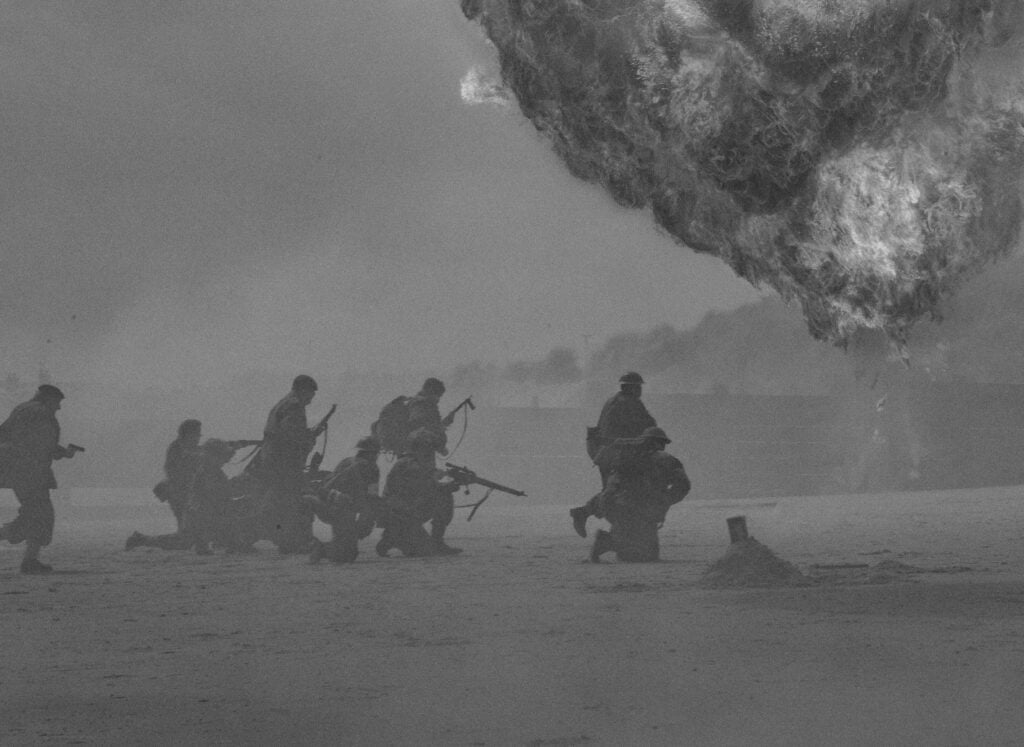
In June 1942, the Japanese navy sailed toward Midway Island with tremendous confidence. After a string of stunning victories, Japan’s commanders believed their fleet was nearly unstoppable. Yet within minutes on June 4, American dive-bombers struck three Japanese aircraft carriers, and before the day was over, all four of Japan’s principal carriers had been destroyed. The fleet that had expected another great victory instead suffered a devastating defeat.
As Pearl Harbor was to the United States, the Battle of Midway was to Japan. It devastated their worldview of total self-confidence and caused them to search for how it all went wrong. Biblical repentance is also a seismic shift in one’s entire worldview that begins in a moment of honest introspection: How did I get here? Where have I gone wrong? We must stop defending ourselves, recognize our need, and turn whole-heartedly back to God.
In Deuteronomy 30:1–2, Moses offers hope to a people who would persistently reject God’s love because God would graciously offer them a way back to Him through repentance. They would remember the blessing and the curse, return to the Lord their God, and obey His voice with all their heart and soul. Biblical repentance, therefore, is a wholehearted turning from sin to God, involving an honest recognition of sin, a decisive return to the Lord, and a changed life of obedience. Although God commands this response, He also graciously works in the heart to make it possible.
A Pivotal Passage on Repentance
In his final climactic charge to Israel, Moses calls for faithfulness to God’s covenant (29:9) and warns them of the dangers of an evil heart that turns from Him (29:18-19; Heb. 3:12). Although Israel would experience God’s wrath and exile from the land (29:22-28), in Deuteronomy 30:1-10 Moses lays out God’s plan for their restoration. The Hebrew root shuv, meaning “to turn” or “to return,” occurs seven times in these ten verses, linking Israel’s recollection of God’s words, its return to the Lord, and God’s restoration of His people. The repeated word highlights the central theme of the passage: turning and restoration. These verses, along with its literary parallel passage in Deut. 4:25-31,1 provide the grounds for the later prophetic calls for Israel to turn back to their covenant God (Zech. 1:3; Mal. 3:7). Recognizing the significance of these verses, the Jewish nation would read them in preparation for their 10 days of repentance before the Feast of Yom Kippur.2 This crucial passage details three successive steps that God expects from His returning people and provides insight into the true nature of repentance.
Step 1: Repentance Begins with Honest Reflection – A New Consideration
Deuteronomy 30:1 says that when the blessing and the curse have come upon Israel, the people will “call them to mind” among the nations where the Lord has driven them. This phrase literally means “to return them to your heart.” They would consider, meditate, and bring God’s words back to mind. Repentance begins when a person honestly faces what God has said and recognizes the true condition of his life.
This inward reflection is the opposite of self-deception. Deuteronomy 29:19 describes a person who hears the words of the curse yet blesses himself in his heart, imagining that he will have peace while continuing in the stubbornness of his own desires. Such a person refuses to let God’s Word expose the danger of sin. Repentance begins when that false confidence gives way to honest consideration of God’s truth. The Scripture repeatedly encourages this sober reflection from sinners (Isa. 46:8; 1 Kings 8:47; see also Deut. 4:39).
The prodigal son illustrates this step when he “came to himself” before returning to his father (Luke 15:17). In the same way, repentance requires more than noticing that life has become difficult. It involves recognizing the truth about sin, accepting responsibility, and longing for the blessing of God. It recognizes sin as sin before God. It stops excusing disobedience, minimizing guilt, or assuming that peace can be claimed while the heart remains determined to go its own way. Genuine repentance agrees with God’s assessment of evil and takes seriously the need to turn from it.
Step Two: Repentance Makes a Decisive Turn – A New Direction
In Deuteronomy 30:2, Moses uses shuv a second time to describe a decisive, 180-degree turn from sin to God. Repentance, therefore, is leaving the pig farm and returning to the Father (Luke 15). The turning that pleases God encompasses one’s whole heart and soul (Deut. 30:10). Repentance engages the whole person: the mind understands one’s sinfulness (1 Kings 8:38); the heart grieves over it with godly sorrow (2 Cor. 7:10); and the will resolves to forsake it (Ezek. 18:30–31).
Yet repentance is not only a turning away from something, but a turning toward Someone. One must believe in the mercy and goodness of God (Isa. 55:7; Rom. 2:4) and hope in the forgiveness and blessing of God in order to turn toward Him (Joel 2:13; Micah 7:18). The contrite man asks God to receive him (Hosea 14:1-2) and yearns to know God personally (Jer. 24:7). Repentance, therefore, is seeking a relationship with God (Deut. 4:29).
Step 3: Repentance Produces a Change in Conduct – A New Action
Deuteronomy 30:2 states: “And shalt return unto the LORD thy God, and shalt obey his voice according to all that I command thee this day, thou and thy children, with all thine heart, and with all thy soul.” The verse joins returning to the Lord with obeying His voice. A child demonstrates that he has truly heard his parents’ voice when he obeys it. Genuine repentance does not stop with verbal admission or inward feeling but goes on to changed conduct. Obedience, therefore, is the visible tip of the iceberg that witnesses to the inward reality of the heart (just as it is for faith, James 2:14-26 and love for God, John 14:15).
A New Testament Summary
Acts 26:20 encapsulates Paul’s gospel preaching: all men must “repent and turn to God, and do works meet for repentance.” His threefold description of man’s responsibility to turn to God bears striking similarity to Deut. 30:1-2.
- Repent: a change of mind toward sin
- Turn to God: conversion—a change in direction toward the Lord
- Works meet for repentance: conduct evidencing the heart-change
Jesus said, “Except ye repent, ye shall all likewise perish” (Luke 13:3). The early church likewise called people to repent and be converted (Acts 3:19) and declared that God commands all people everywhere to repent (Acts 17:30). These passages show that repentance is not an optional extra but is central to the biblical call to turn to God.
Some Christians hesitate to emphasize repentance because they rightly want to safeguard justification by faith apart from works. Others point to New Testament books that do not use the word “repentance.” Yet the absence of a particular word does not necessarily mean the absence of its underlying concept. Repentance and faith are distinguishable but inseparable responses to the gospel as two sides to the same coin. Neither is a meritorious work that earns God’s favor. Rather, genuine faith receives Christ, while genuine repentance abandons the rebellion and rival allegiances incompatible with trusting Him. One cannot accept Christ by faith without rejecting all other idols (1 Thess. 1:9), all other sources of confidence (Phil. 3:3-9), and all other allegiances (Matt. 10:37). As Jesus preached, “Repent ye, and believe the gospel” (Mark 1:15). Paul also described his message as “repentance toward God, and faith toward our Lord Jesus Christ” (Acts 20:21). Repentance is faith-filled, and faith is repentant so that they are experienced as one reality – “repentant faith.” Salvation must be a turning from a God-rejecting, sin-loving, self-indulging life, or it is no salvation at all.
A Turning Made Possible by Grace
Although Deuteronomy 30 calls people to turn and obey, the broader context identifies that God’s gracious working enables that change of heart and life. Deut. 30:8 presents repentance and obedience as the outworking of God’s circumcision of the heart (30:6). Repentance begins in the heart (30:1), but Deuteronomy 29:4 observes that the Lord must give the people a heart to perceive. The New Testament confirms (Acts 5:31; 11:18; 2 Tim. 2:25) what the Old Testament acknowledges (Lam. 5:21; Jer. 31:18): God must do the gracious work of turning His people. Deuteronomy anticipates the New Covenant promises of God’s working within the heart (Ezek. 36:26; Jer. 24:7; 31:33) which is accomplished through regeneration (spiritual circumcision, Col. 2:11; Rom. 2:29). Through this divine, heart surgery, God enables men to love Him and experience His life (30:6).3 The Holy Spirit, therefore, must enable repentance (Zech. 12:10). This gracious working of God does not eliminate man’s responsibility to repent but rather makes man dependent upon God to fulfill his responsibility and ensures that God is thanked when men produce the fruit of repentance (Rom. 6:17).
The Nature of Repentance
Deuteronomy 30 establishes biblical repentance as a wholehearted return to God. It begins when sinners from the heart consider God’s Word and honestly acknowledge the truth about their sin. It proceeds as they turn from their former course and seek the Lord’s mercy. It becomes visible in a renewed life of obedience. Yet this turning is never merely an exercise of human determination. God graciously works in the heart, enabling His people to love Him and walk in His ways.
“Repent ye, and believe the gospel.” — Mark 1:15
Image created with Adobe Firefly
- Deuteronomy 4:30 and 30:2, 8, 10 are the only usages of shuv in the Pentateuch that describe God’s requirement for Israel to “return” to God. Deut. 4 and 29-30 also provides a literary inclusio around Moses’ sermon 5-28 (often divided as 5-11, 12-26, 27-28). [↩]
- Duane L. Christensen, Deuteronomy 21:10–34:12, vol. 6B, WBC (Dallas: Word, 2002), 735. [↩]
- Christopher J. H. Wright states that “thus the fundamental demand of the law (to love God with all one’s heart and soul) is presented as the ultimate fruit of God’s grace in the human heart.” Deuteronomy, ed. W. Ward Gasque, Robert L. Hubbard Jr., and Robert K. Johnston, Understanding the Bible Commentary Series (Grand Rapids, MI: Baker Books, 2012), 289–290. [↩]
Discover more from Proclaim & Defend
Subscribe to get the latest posts sent to your email.