For better or for worse, we live in a motion picture culture. With the advent of streaming, movies are available everywhere. It is astonishing to me to walk through the Electronics section of a Walmart or Target and see bins of DVD movies (most of them of dubious quality) available for low, low prices. “When I was a lad …” I feel like an old man thinking about this — when I was a lad the only movies that were available were in the movie theaters and on late night reruns on television (only two channels available). I well remember the leap forward that VHS video became. Ordinary people could rent a tape (and a machine if need be) and watch movies of their choice in their own homes.
How far we have come since then!
Despite conservative Christian objection to “Hollywood movies,” Christians have used the medium of film very effectively as they produced movies of their own. Most of these were relatively low budget, but there is no denying the emotional impact moviemaking can have. My own life felt the impact of BJU’s Flame in the Wind as I was wrestling with the call to preach. The film stirred me to make the commitment to full-time ministry. I would say that it literally changed the course of my life.
Recently my wife and I viewed the movie A Great Awakening produced by Sight & Sound Films, a division of Sight & Sound Ministries Inc. Since 1976, this organization has been presenting stories on Christian themes, especially depicting the lives of various Bible characters.
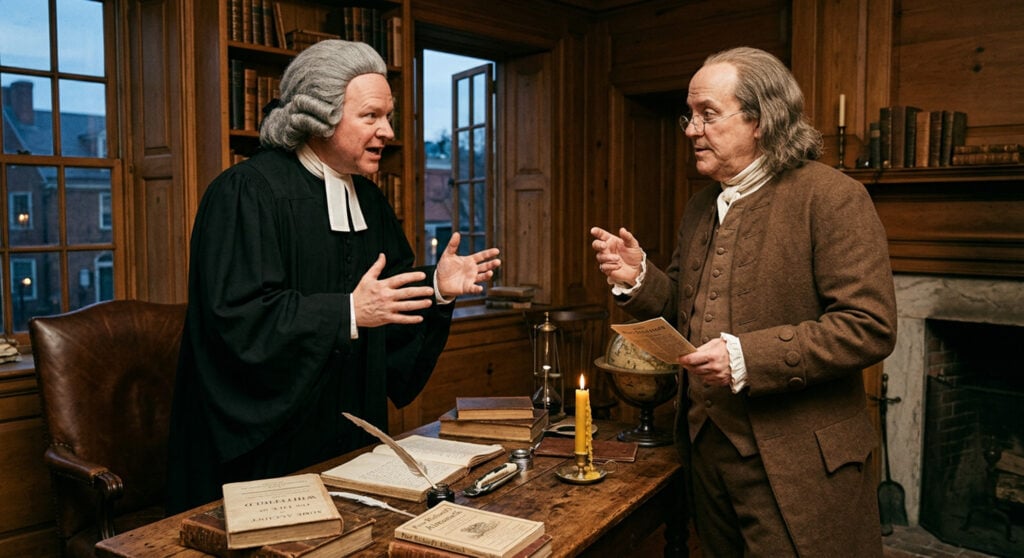
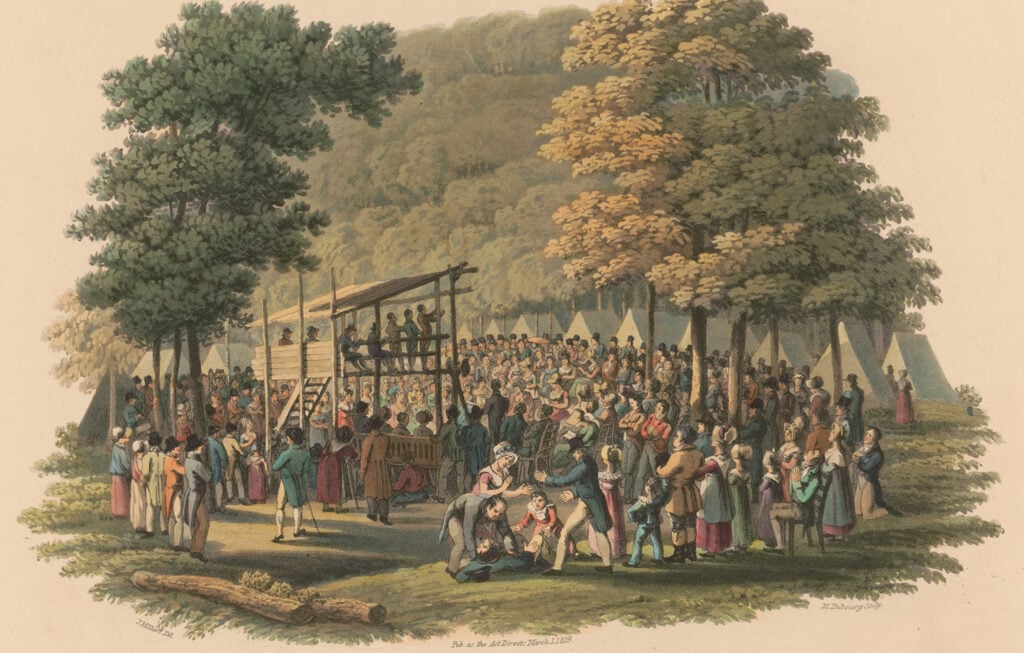
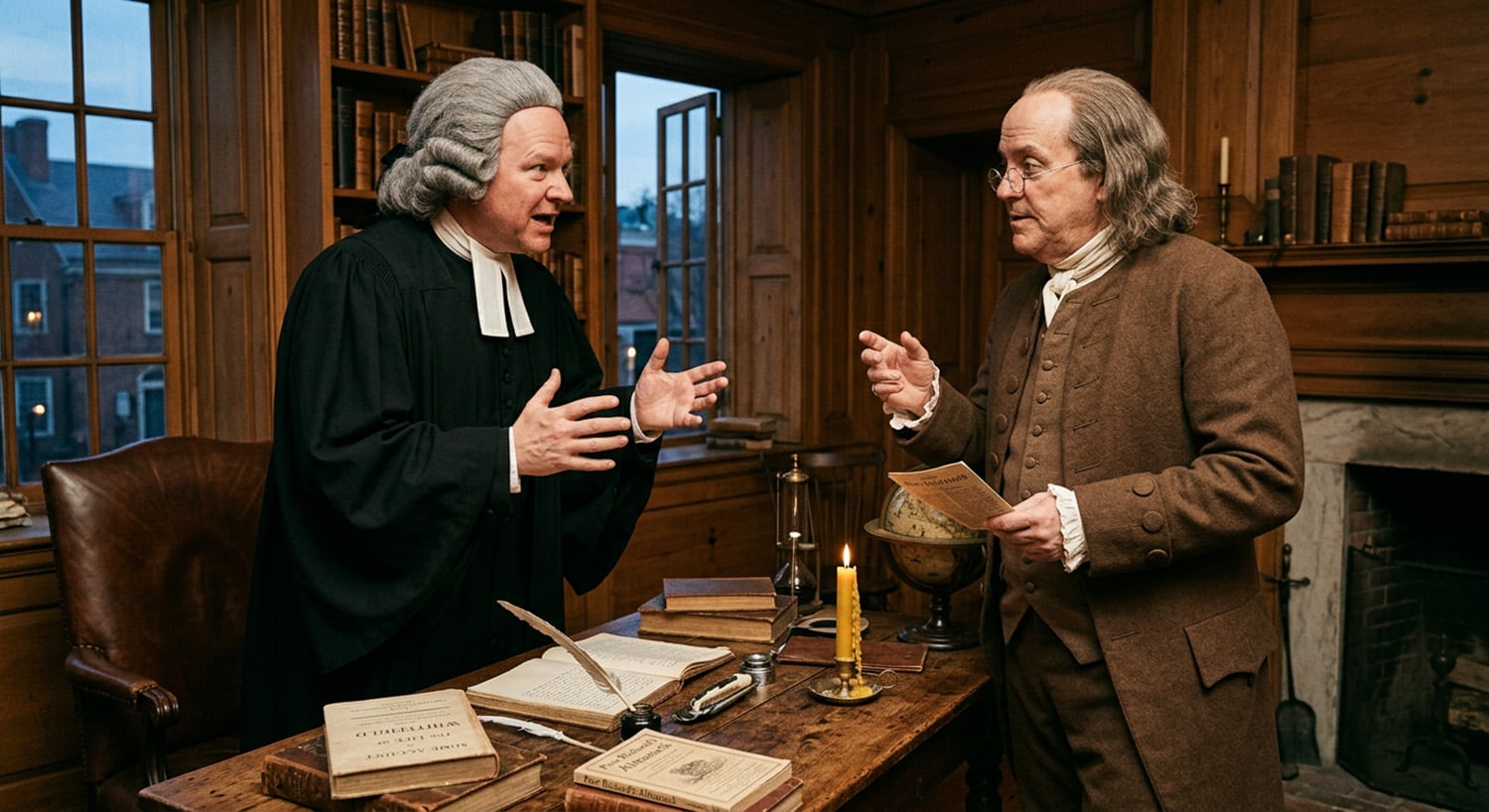
The movie A Great Awakening tells the story of the relationship between evangelist George Whitefield and Benjamin Franklin during the period when Whitefield came to America to stir great crowds in revival, the movement that came to be known as “the Great Awakening.” I will leave it to others to review the film, here are a few reviews I have found:
- Movie Review: A Great Awakening, the history behind the movie | Bill Petro
- IMDB page: https://www.imdb.com/title/tt33305882/
- Rotton Tomatoes page: A Great Awakening | Rotten Tomatoes
My focus, rather than reviewing the film, is to address the portrayal of Franklin near the end of his life. The movie shows him powerfully moved by his recollection of Whitefield’s life and seemingly coming to a Christian conclusion in his well-documented motion to begin the Constitutional Convention with prayer. His motion failed, although see some of the notes in Bill Petro’s review listed above.
The film left me with the impression that somehow, Benjamin Franklin made a spiritual decision at the end of his life. Many Christians, I am sure, would come away with the notion that good old Ben became a believer. I am not sure that the producers deliberately set out to give this impression, but I am sure that many would take this impression from the visual presentation before them. The Wikipedia entry for the movie confirms this impression:
“The last time they were together, Whitefield made a strong appeal to Franklin to trust in Jesus Christ for salvation. Franklin as a deist did not accept the divinity of Christ in that moment. But as he remembers Whitefield’s words in 1789, he does turn to God in Christ and then goes on to call the Constitutional Convention to pray to God.”1
My recollections were jarred by this — I had always thought that good old Ben lived and died a Deist, or a rank unbeliever. I knew he was friendly with Whitefield, but I always thought Franklin was never moved by Whitefield’s message.
What was the state of Franklin’s spiritual life? I’ll cite just a couple of examples:
“Yet though Franklin supported Whitefield’s good works and defended his right to preach, he drew the line well short of his own conversion. Whitefield spared no effort on behalf of Franklin’s soul, but Franklin rebuffed them all. He was as skeptical of organized religion as ever, even religion that challenged prevailing orthodoxy.”2
“In 1790, just about a month before he died, Franklin wrote a letter to Ezra Stiles, president of Yale University, who had asked him his views on religion:
As to Jesus of Nazareth, my Opinion of whom you particularly desire, I think the System of Morals and his Religion, as he left them to us, the best the world ever saw or is likely to see; but I apprehend it has received various corrupt changes, and I have, with most of the present Dissenters in England, some Doubts as to his divinity; tho’ it is a question I do not dogmatize upon, having never studied it, and I think it needless to busy myself with it now, when I expect soon an Opportunity of knowing the Truth with less Trouble. I see no harm, however, in its being believed, if that belief has the good consequence, as it probably has, of making his doctrines more respected and better observed; especially as I do not perceive that the Supreme takes it amiss, by distinguishing the unbelievers in his government of the world with any particular marks of his displeasure.”3
Examples like these are easy to find. If you go to the source (Franklin’s own words), I think you will be quickly disabused of any notion of any kind of conversion experience in Franklin’s life.
What are we to make, then, of the impression of conversion in a well-acted, glossily presented, seemingly Christian film about Franklin and Whitefield?
- We need to exercise great care when we watch movies, even the “wholesome” ones. Are movies telling us the truth about their subjects? Should we believe the view of history movies present?
- We need to check our credulity when Christians make “amazing” new facts available about historical figures. Once in a while you will find an amazing story in the past, it is true — but usually movies aren’t telling true stories, especially when they are telling us history. Crucial details are left out, obscured, or simply misrepresented for “dramatic effect.”
- We should consider our credulity when it comes to sentimental stories that parallel our Christian worldview. We want to believe Ben Franklin became a Christian because we like Ben Franklin and he did know Whitefield and they were friends and it would just be so nice if Ben really believed. But he didn’t.
- We should also check our credulity about any number of other subjects, whether in a movie, on a website, or in the breathless voice of an excited friend. There are many ideas peddled in our world that just aren’t true. Most of the time these ideas are relatively harmless in the big scheme of things, but sometimes we are taught and/or believe ideas that move us to act wrongly and hurt our Christian testimony. (I’m especially pointing at the many conspiracy theories that so many Christians seem to fall for here.)
Can we enjoy movies? Sure. I enjoyed this one. I thought it was well done. But, don’t throw your discernment out the window just because you enjoyed a movie. What you are seeing on the screen isn’t exactly what happened — it is the movie producer’s imaginings of what happened. And usually he his crafting his story for maximum impact. That isn’t always bad, but movies should be occasions for you to think rather than to feel. There is plenty of “feeling” going on in our world and precious little thinking.
Image created by Adobe Firefly
- “A Great Awakening,” Wikipedia, September 8, 2026. [↩]
- H. W. Brands, The First American: The Life and Times of Benjamin Franklin, 1st Anchor Books ed (Anchor Books, 2002), 150. [↩]
- Quotation from Carl Van Doren, Benjamin Franklin. (1945). pages 252–253, in “Benjamin Franklin,” Wikipedia, October 17, 2026, also quoted in H. W. Brands, The First American: The Life and Times of Benjamin Franklin, 1st Anchor Books ed (Anchor Books, 2002), 707. [↩]
Discover more from Proclaim & Defend
Subscribe to get the latest posts sent to your email.