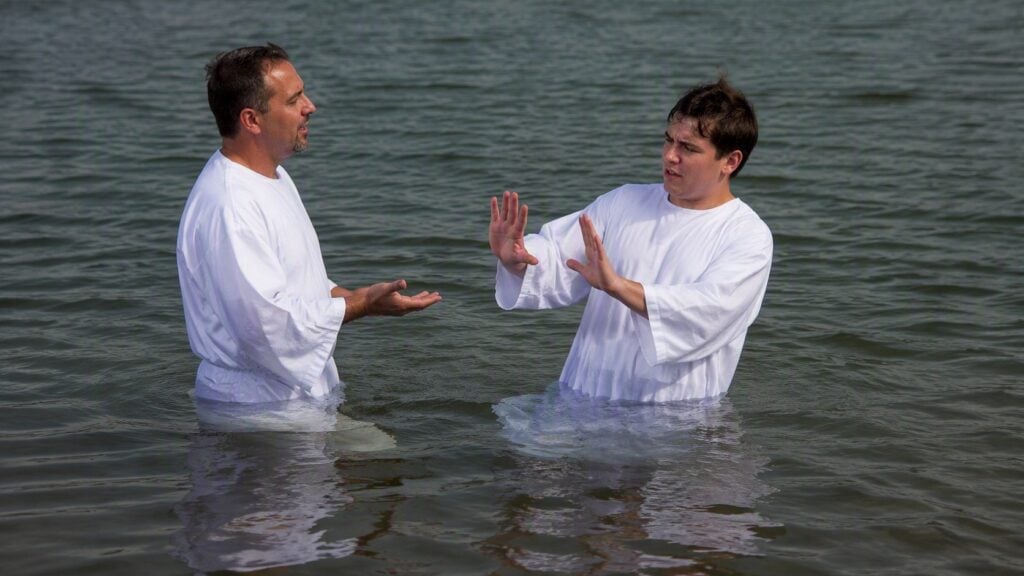
I have been doing a series on Sunday evening on doubt and assurance of salvation. We usually have a time of discussion following the message. This question came up Sunday night.
“Why would a person who claims to be saved, refuse to be baptized?”
It took me a little while to formulate my answer, but here it is, based upon 40 years of time in ministry. To me, there are four primary reasons why a person who claims to be saved might refuse to be baptized. None of them are good reasons.
One: Ignorance, or theological misunderstanding
Baptism is an act of obedience for a believer. It is not an optional biblical step. The person who is truly saved but is refusing baptism is sinning. Yes. Sinning. Many do not believe this is true. The Great Commission commands evangelism, baptism, and discipleship. Some have never been taught this, while others have refused to be convinced.
Also, some are under the illusion that a previous baptism experience satisfies the biblical requirement. Consider the following.
- If a person was baptized BEFORE being born again, they have not been biblically baptized.
- If they were not baptized by immersion, they have not been biblically baptized. It is not the purpose of this post to argue theologically what Baptists believe about baptism. I am simply stating it as a reason why some refuse to be baptized.
- If they understood baptism to be playing any part in their new birth, they have not been biblically baptized and should probably meet with a pastor or other qualified spiritual leader to get guidance on what salvation really is.
Such a person needs to be lovingly taught biblical truth, and then they should humbly submit to it.
Two: Fear
Some, who have truly trusted Christ, hesitate to be baptized out of fear. The fear can be rooted in various sources: fear of water, fear of being in front of people, fear of giving a testimony in public, fear of family disapproval.
This type of fear is also sin. Proverbs 29:25 says, “The fear of man brings a snare, but whoever trusts in the Lord shall be safe.” It is not just that fear is a sin, it is the result of a deeper heart sin. Matthew 22:37 says that we should love the Lord with all our hearts, while 1 John 4:18 says that perfect love (as in love for the Lord) casts out fear. Jesus says that we should love Him more than family (Matthew 10:37). Fear is the symptom. Lack of an obedient love for the Lord is the problem.
Three: Doubt
People who have grown up in Christian homes and professed faith in some way at an early age often fall into this category.
They stubbornly argue that they are saved based upon some experience in the past—they walked an aisle, prayed a prayer, or something of the sort. They refuse to admit to parents, pastors, or other spiritual leaders that they might not be saved. But deep down, they have sincere doubts about whether they are truly saved or not.
Helping our children in their progress toward salvation is one of the most difficult things that Christian parents do. We want to teach our children. We want to encourage them toward faith in Christ. But we do not want them to simply trust in a prayer like it is a magic spell or say words to please us. Often the most compliant, obedient children have the greatest difficulty. It is hard to distinguish between pleasing parents and being obedient to the Holy Spirit in trusting Christ.
The matter of personal salvation should ultimately be settled first, before baptism. If a person hesitates to be baptized for this reason, they should be honest about it rather than stubbornly claiming to be saved publicly while doubting privately.
Four: Rebellion
Almost every pastor, when baptizing a person asks them some variation of these two questions.
- “Have you trusted Jesus Christ alone for your eternal salvation?”
- “Is it your desire to live in obedience to His commands?”
For some people, it’s the second question that is the problem.
A person can truly trust Jesus Christ as Savior fail to take the next steps of obedience.
“But the first step of obedience is baptism!” you say.
It might be, but practically, it’s not how it usually works. I have found that people can truly understand salvation and truly cry out to God for forgiveness of sin but still struggle with how the Lordship of Christ works out in life. They truly get saved but are still living with a partner outside of marriage. They might be dealing with an addiction or other very public sin. A child might get saved, and then later, through the influence of friends, bitterness, or just plain selfishness lead a life of rebellion.
There is a reason that Paul commanded Christians to present their bodies a living sacrifice unto the Lord in Romans 12:1-2. It is because some Christians are not doing it. If this level of lordship always accompanied salvation, these verses would be pointless.
For the believer in rebellion, getting baptized feels like hypocrisy.
And it is.
They need to address their sinful heart, confess it as sin, and commit themselves to truly following Christ in their life choices. Then they should be baptized.
Baptism does not indicate a believer has it all figured out or is living perfectly. But that person should be committed to living their life God’s way, not their own.
Have you followed the Lord in baptism? Why not? Figure it out and act now. True believers should follow the Lord in believer’s baptism.
Image created by Microsoft CoPilot
Discover more from Proclaim & Defend
Subscribe to get the latest posts sent to your email.